Automatic Bowl Feeder Systems: Features & Technical Specifications
In today’s highly automated manufacturing environment, efficient component feeding is critical for maintaining production speed, consistency, and quality. Automatic Bowl Feeder Systems have become an essential part of assembly lines across industries such as automotive, electronics, pharmaceuticals, medical devices, fasteners, electrical components, and consumer goods.
India’s No. 1
Bowl Feeder Manufacturer
These systems automatically orient, sort, and feed components to downstream automation equipment, reducing manual handling and increasing production efficiency.
This guide covers everything you need to know about Automatic Bowl Feeder Systems, including their features, working principles, technical specifications, applications, and selection criteria.
What is an Automatic Bowl Feeder System?
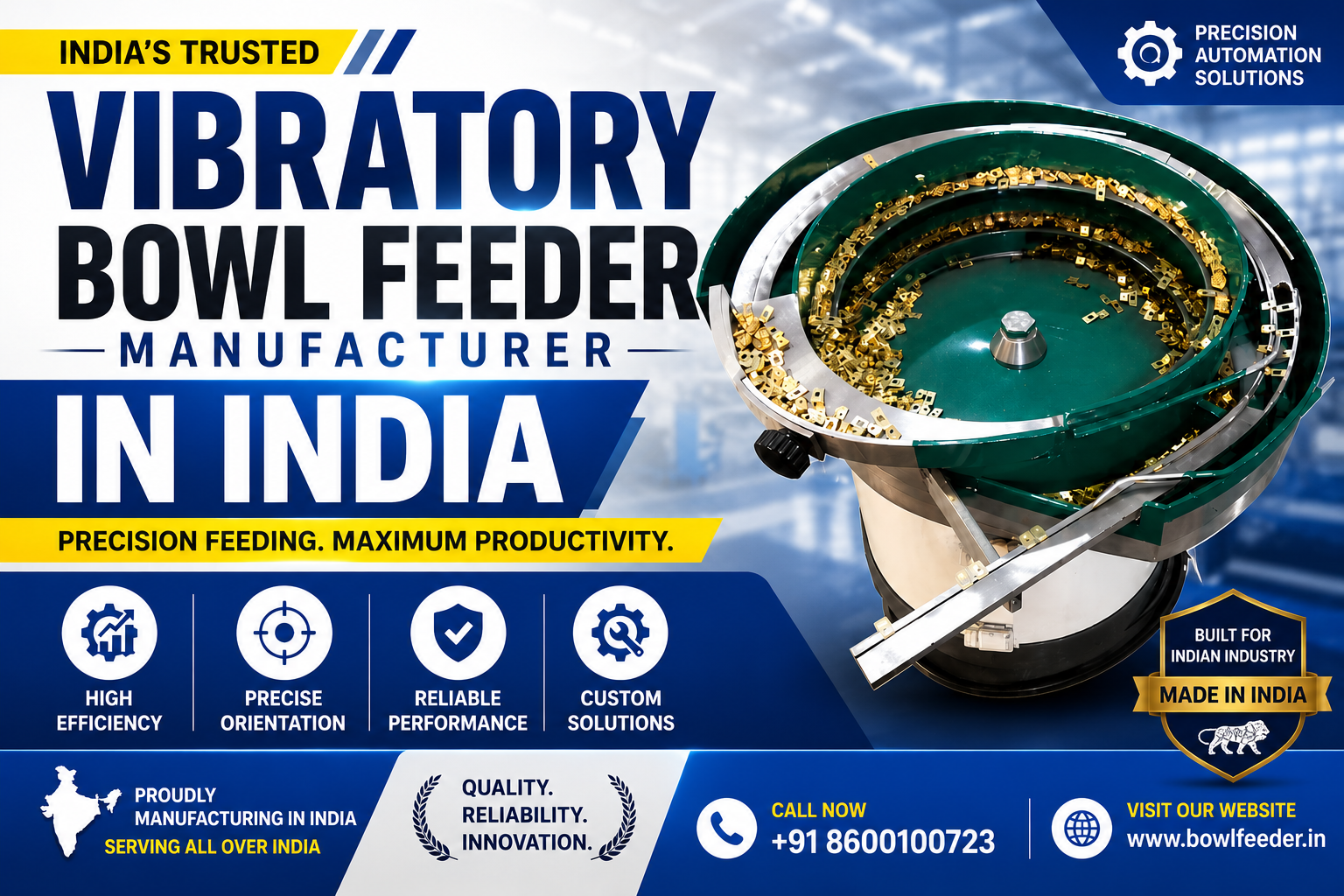
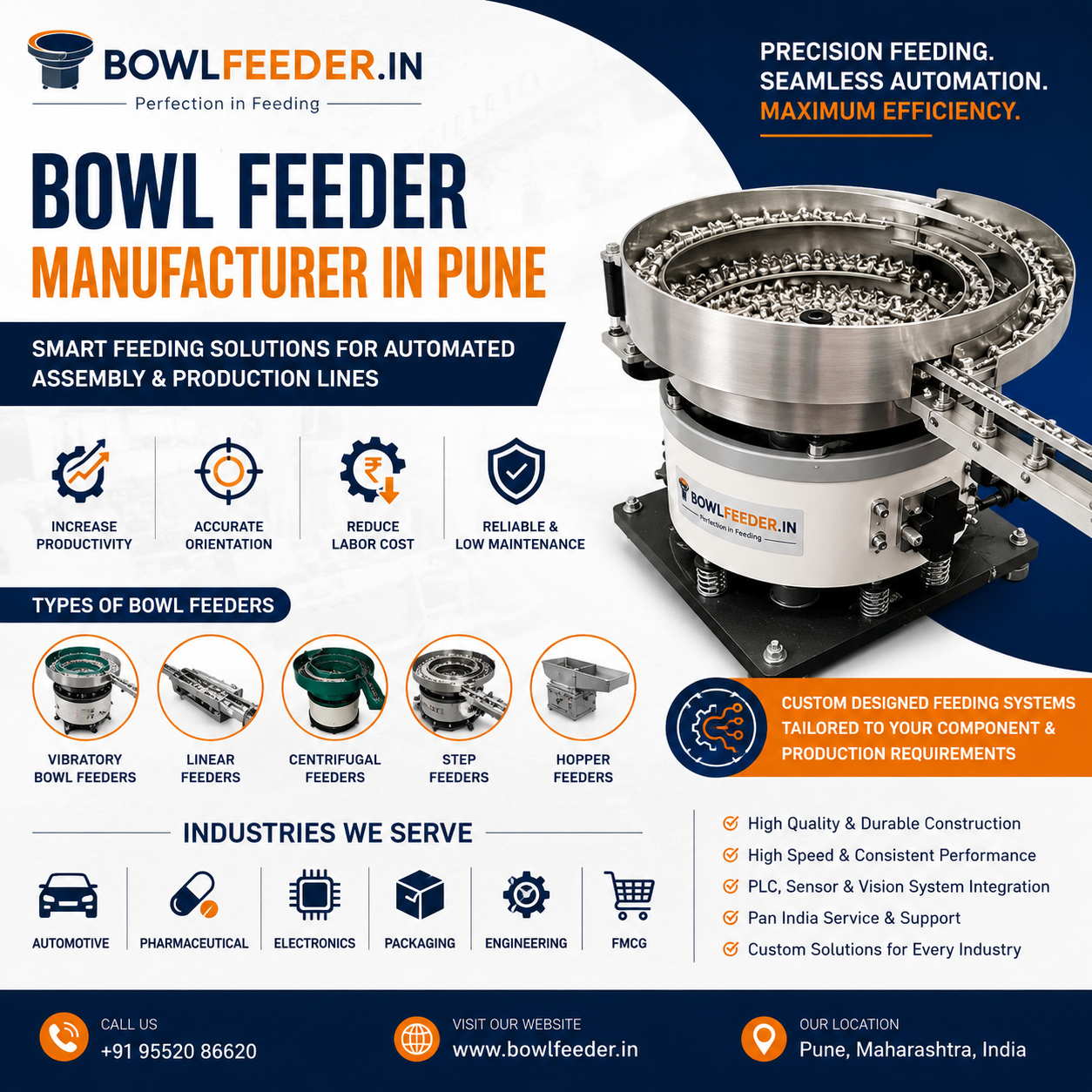
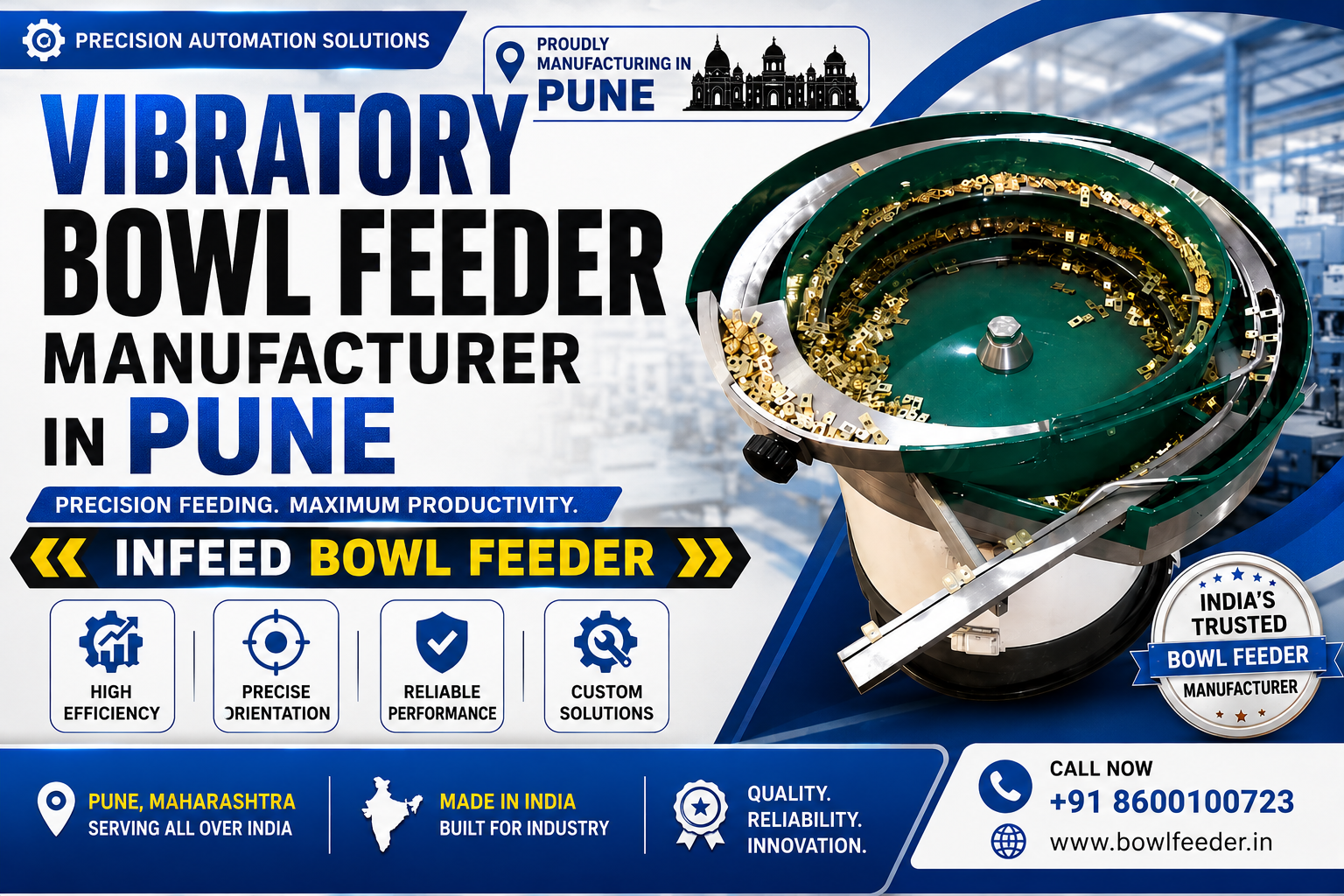
An Automatic Bowl Feeder System is an automated parts-feeding solution designed to sort, orient, and deliver components in a specific position to assembly machines, robotic systems, packaging lines, or inspection stations.
The system typically consists of:
- Vibratory Bowl Feeder
- Linear Feeder
- Hopper/Elevator
- Controller Unit
- Sensors and Orientation Tooling
- Feeding Track
The bowl feeder uses controlled vibrations to move components upward along a specially designed track where they are oriented correctly before being delivered to the next manufacturing process.
How Does an Automatic Bowl Feeder Work?
The operating principle of an automatic bowl feeder is based on controlled electromagnetic vibration.
Step 1: Loading Components
Bulk components are loaded into the bowl manually or automatically through a hopper.
Step 2: Vibratory Movement
The electromagnetic drive generates vibrations that move parts upward along the spiral track.
Step 3: Orientation Process
Custom tooling along the track removes incorrectly oriented parts and allows only correctly positioned components to continue.
Step 4: Linear Feeding
The oriented parts move through a linear feeder for consistent part presentation.
Step 5: Delivery to Machine
Components are delivered directly to assembly machines, robots, inspection stations, or packaging equipment.
Key Features of Automatic Bowl Feeder Systems
1. High-Speed Feeding
Automatic bowl feeders can feed hundreds of parts per minute depending on component size and complexity.
2. Precise Orientation
Custom-designed tooling ensures accurate positioning of components before assembly.
3. Continuous Operation
Designed for 24/7 industrial production environments.
4. Low Maintenance
Simple mechanical construction results in minimal maintenance requirements.
5. Customizable Design
Systems can be tailored for:
- Screws
- Nuts
- Washers
- Plastic parts
- Electronic components
- Medical components
- Automotive parts
6. Integration Capability
Can be integrated with:
- Robotic systems
- Pick-and-place units
- Vision inspection systems
- PLC controls
- Assembly machines
7. Compact Footprint
Requires minimal floor space while providing high throughput.
8. Smart Controls
Modern systems include:
- Digital frequency control
- Amplitude adjustment
- Sensor integration
- Remote monitoring capability
Technical Specifications of Automatic Bowl Feeder Systems
The specifications vary according to application requirements.
| Parameter | Typical Specification |
|---|---|
| Bowl Diameter | 200 mm to 1200 mm |
| Feeding Capacity | 20 to 1000+ Parts/Minute |
| Operating Voltage | 230V AC / 415V AC |
| Frequency | 50 Hz / 60 Hz |
| Drive Type | Electromagnetic Vibratory Drive |
| Bowl Material | SS304, SS316, Mild Steel, Polyamide |
| Controller Type | Analog or Digital |
| Noise Level | Below 75 dB |
| Part Size Range | 1 mm to 150 mm |
| Power Consumption | 50W to 1500W |
| Hopper Capacity | 5 Liters to 500 Liters |
| Feeding Accuracy | Up to 99.9% Orientation Accuracy |
| Control System | PLC Compatible |
| Protection Rating | IP54, IP65 Available |
Types of Automatic Bowl Feeders
Vibratory Bowl Feeders
Most widely used for handling small and medium-sized components.
Advantages:
- High speed
- Cost-effective
- Reliable operation
Centrifugal Bowl Feeders
Suitable for very high-speed feeding applications.
Advantages:
- Extremely fast feeding
- Low noise
- Gentle part handling
Flexible Feeding Systems
Used when multiple component types must be handled using a single system.
Advantages:
- High flexibility
- Quick changeover
- Vision-guided operation
Industries Using Automatic Bowl Feeder Systems
Automotive Industry
Applications include feeding:
- Screws
- Clips
- Fasteners
- Bearings
- O-rings
Electronics Industry
Used for:
- Connectors
- Terminals
- Switches
- Electronic housings
Pharmaceutical Industry
Suitable for:
- Caps
- Syringes
- Medical components
Consumer Goods Industry
Applications include:
- Bottle caps
- Plastic parts
- Packaging components
Electrical Industry
Feeds:
- Relays
- Connectors
- Switch components
Benefits of Automatic Bowl Feeder Systems
Increased Productivity
Automation significantly improves production throughput.
Reduced Labor Costs
Minimizes manual sorting and feeding operations.
Consistent Quality
Accurate part orientation reduces assembly defects.
Faster Assembly Cycles
Continuous component supply eliminates machine downtime.
Better Workplace Safety
Reduces operator involvement in repetitive tasks.
Improved ROI
Quick payback through productivity gains and labor savings.
Factors to Consider When Selecting a Bowl Feeder
Component Characteristics
Evaluate:
- Shape
- Weight
- Size
- Surface finish
Required Feed Rate
Determine the required parts per minute.
Orientation Complexity
Complex parts require specialized tooling.
Material Compatibility
Select suitable bowl material:
- SS304
- SS316
- Polyurethane Coating
- Polyamide
Integration Requirements
Ensure compatibility with:
- PLCs
- Robots
- Vision systems
- Assembly machines
Common Challenges and Solutions
Part Jamming
Solution: Optimize track design and tooling.
Inconsistent Feed Rate
Solution: Adjust vibration frequency and amplitude.
Excessive Noise
Solution: Use sound covers and optimized drive settings.
Part Damage
Solution: Apply soft coatings and gentle feeding technology.
Future Trends in Automatic Bowl Feeding Technology
The future of bowl feeder systems is driven by Industry 4.0 and smart manufacturing technologies.
Emerging innovations include:
- AI-assisted feeding systems
- Vision-guided orientation
- Predictive maintenance
- IoT-enabled monitoring
- Smart vibration control
- Robotic integration
- Digital twin technology
These advancements improve efficiency, flexibility, and overall equipment effectiveness (OEE).
Why Choose Infinity Technology for Automatic Bowl Feeder Systems?
Infinity Technology specializes in custom-designed bowl feeder solutions for industrial automation applications.
Our solutions offer:
- High feeding accuracy
- Robust construction
- Custom tooling design
- PLC integration
- Hopper and linear feeder integration
- After-sales support
- Industry-specific automation expertise
Whether your application involves automotive, electronics, pharmaceuticals, fasteners, or assembly automation, we provide reliable feeding systems tailored to your production requirements.
Conclusion
Automatic Bowl Feeder Systems are a critical component of modern manufacturing automation. They provide high-speed, accurate, and reliable feeding of components, helping manufacturers improve productivity, reduce labor costs, and maintain consistent product quality.
By understanding their features, technical specifications, and application requirements, manufacturers can select the ideal bowl feeder system for their production lines and achieve long-term operational efficiency.