Introduction
In modern manufacturing industries, automation plays a crucial role in improving productivity, accuracy, and efficiency. One of the most important components of automated assembly and production lines is the Bowl Feeder. Bowl feeders are widely used to orient, sort, and feed components automatically to machines, robots, and assembly stations.
India’s No. 1
Bowl Feeder Manufacturer
Whether you are in the automotive, pharmaceutical, electronics, FMCG, or engineering industry, a properly designed bowl feeder can significantly reduce manual labor and increase production speed.
What Is a Bowl Feeder?
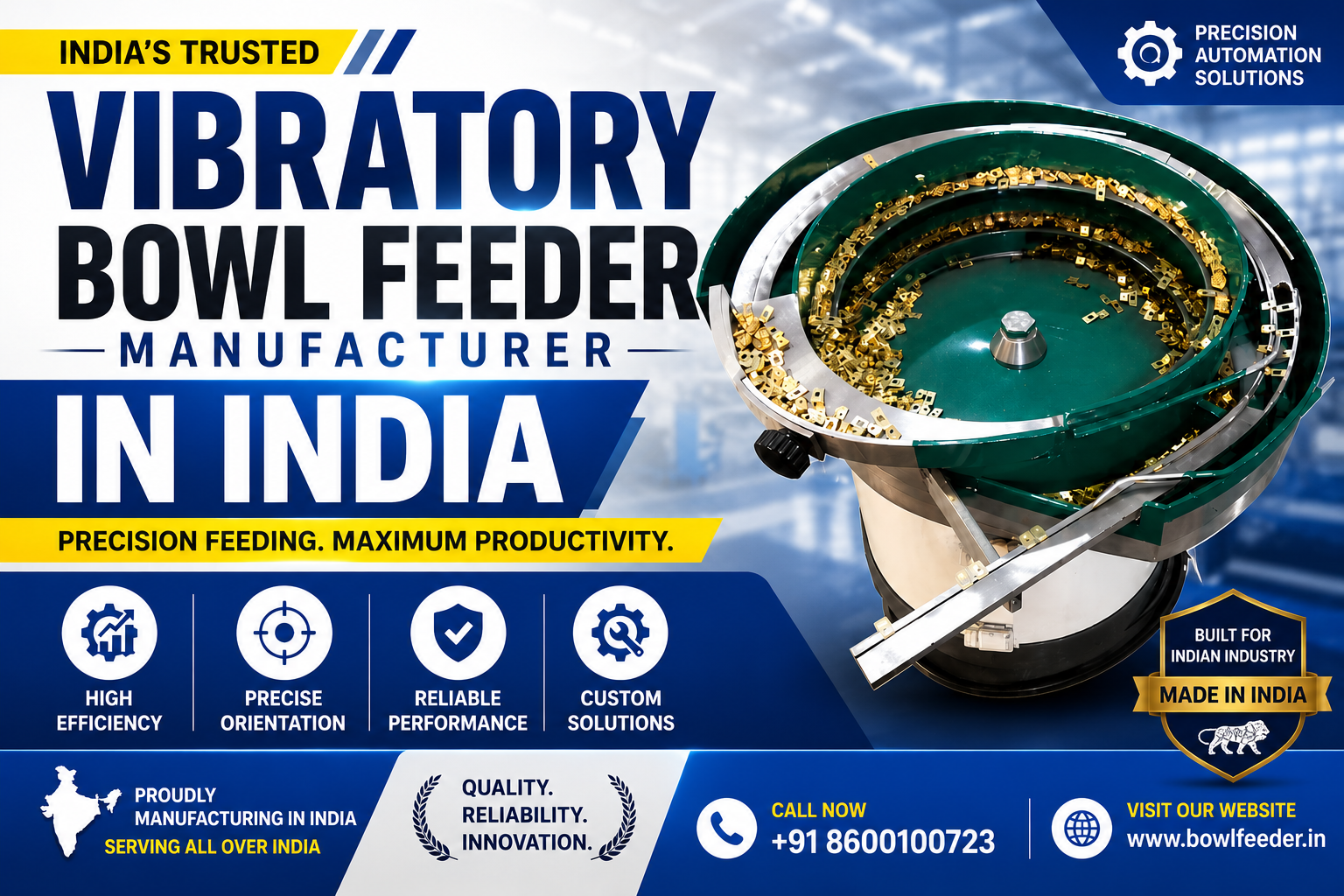
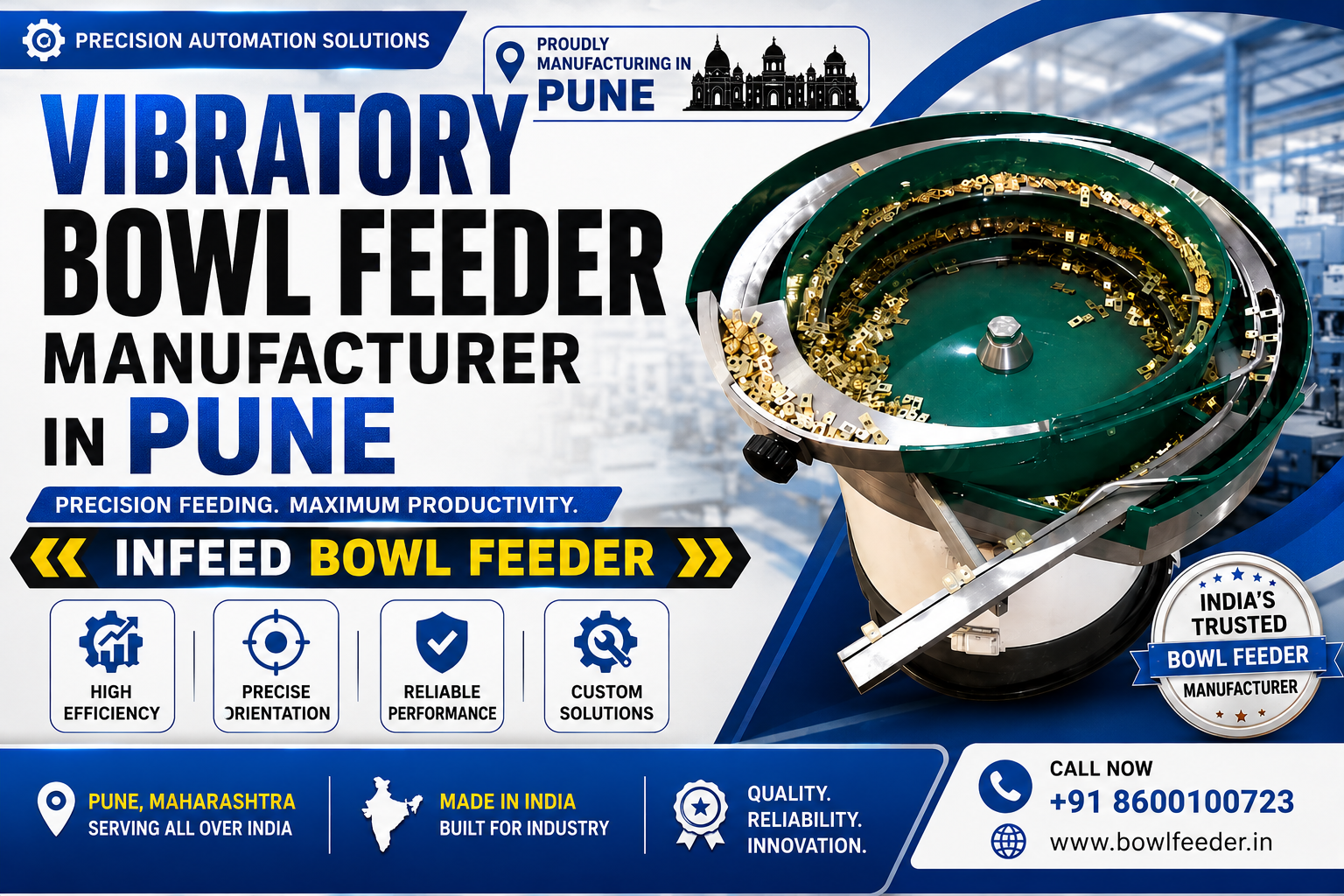
A bowl feeder is an automated feeding system designed to sort, orient, and deliver components in a consistent manner. It consists of a vibratory bowl, controller, base unit, and tooling designed specifically for the component being fed.
As components move through the bowl, specially designed tracks and tooling ensure that only correctly oriented parts proceed to the exit track, while incorrectly positioned parts return to the bowl for recirculation.
How Does a Bowl Feeder Work?
The working principle of a bowl feeder is based on controlled vibration. The vibration generated by the drive unit causes components to move upward along a spiral track inside the bowl.
During movement:
- Components are separated from bulk material.
- Parts are oriented into the desired position.
- Incorrectly positioned parts are rejected.
- Correctly oriented parts are delivered to the production line.
This process ensures continuous and reliable feeding without manual intervention.
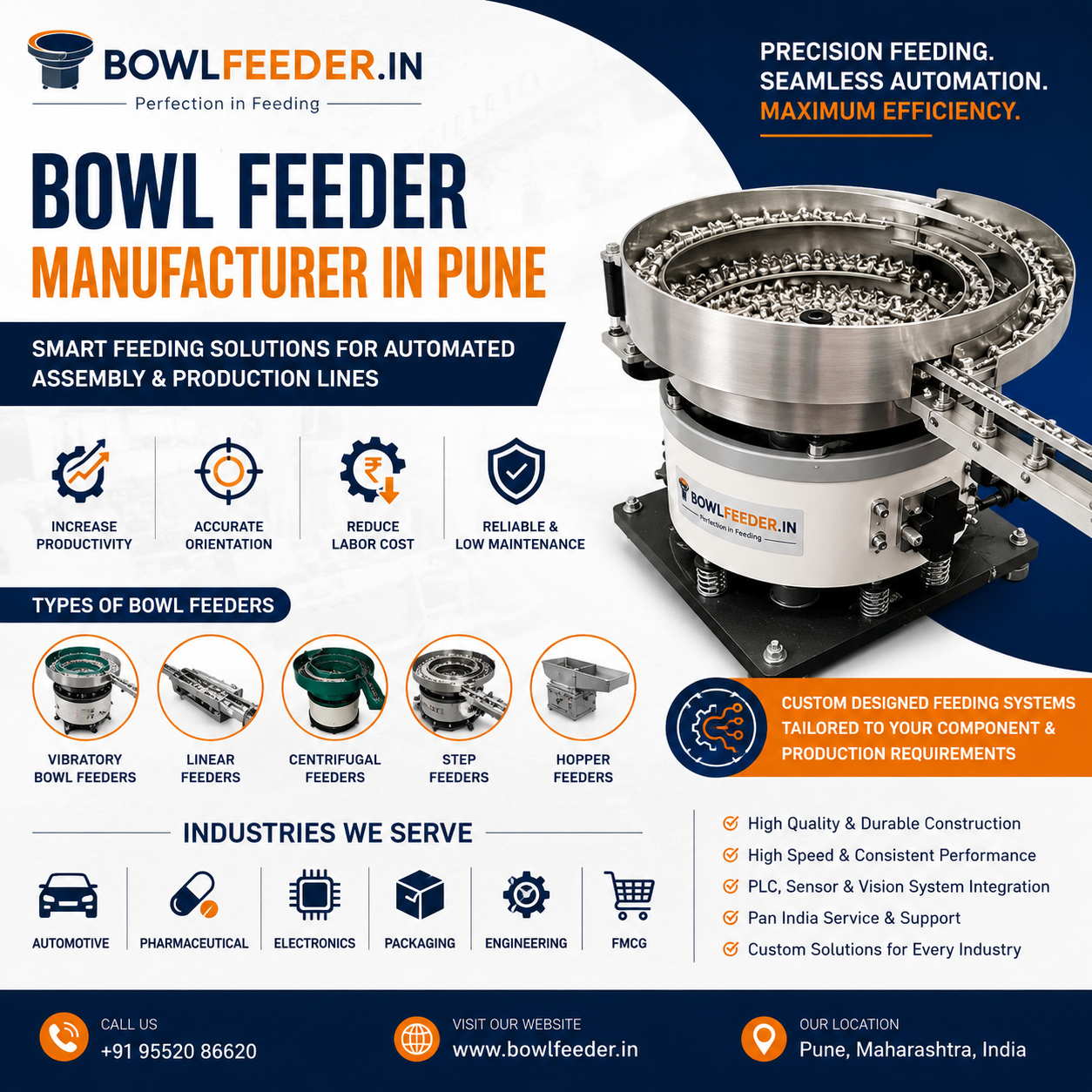
Types of Bowl Feeders
1. Vibratory Bowl Feeders
The most commonly used feeding system in industrial automation. These feeders provide precise orientation and high feeding accuracy for a wide range of components.
2. Centrifugal Feeders
Designed for high-speed applications where large quantities of lightweight parts must be fed rapidly.
3. Step Feeders
Ideal for delicate components requiring gentle handling and low-noise operation.
4. Linear Feeders
Used alongside bowl feeders to transport oriented components smoothly to assembly or inspection stations.
Benefits of Using Bowl Feeders
Increased Productivity
Automated feeding eliminates manual sorting and significantly increases production rates.
High Accuracy
Custom tooling ensures precise component orientation and delivery.
Reduced Labor Costs
Automation reduces dependency on manual operators.
Continuous Operation
Bowl feeders provide uninterrupted component supply for production lines.
Improved Product Quality
Consistent feeding minimizes errors and improves assembly accuracy.
Industries Using Bowl Feeders
Bowl feeders are widely used in:
- Automotive Industry
- Pharmaceutical Industry
- Electronics Manufacturing
- Medical Device Manufacturing
- Electrical Components Industry
- FMCG Industry
- Packaging Industry
- Engineering Industry
Choosing the Right Bowl Feeder
When selecting a bowl feeder, consider:
- Component size and shape
- Production speed requirements
- Material type
- Orientation complexity
- Industry standards
- Future scalability
Working with an experienced bowl feeder manufacturer ensures the system is optimized for your production needs.
Why Choose BowlFeeder.in?
At BowlFeeder.in, we design and manufacture custom bowl feeding systems tailored to specific components and production requirements. Our solutions include:
- Vibratory Bowl Feeders
- Linear Feeders
- Centrifugal Feeders
- Step Feeders
- Storage Hoppers
- Elevator Feeders
- Vision Inspection Systems
- Complete Feeding Automation Solutions
Our engineering team focuses on reliability, precision, and long-term performance to help manufacturers achieve maximum productivity.
Conclusion
Bowl feeders are essential components of modern industrial automation systems. They improve production efficiency, reduce labor costs, and ensure accurate component feeding for assembly and inspection processes.
If your business requires a reliable and customized feeding solution, investing in a high-quality bowl feeder can deliver significant operational benefits and support long-term manufacturing growth.