In modern manufacturing and assembly operations, efficiency is paramount. One piece of equipment that plays a crucial role in automating parts handling and assembly processes is the bowl feeder. Whether you’re in automotive, pharmaceutical, electronics, or consumer goods manufacturing, bowl feeders can dramatically improve your production speed and consistency.
India’s No. 1
Bowl Feeder Manufacturer
This comprehensive guide explores everything you need to know about bowl feeders—from how they work to choosing the right system for your operation.
What Is a Bowl Feeder?
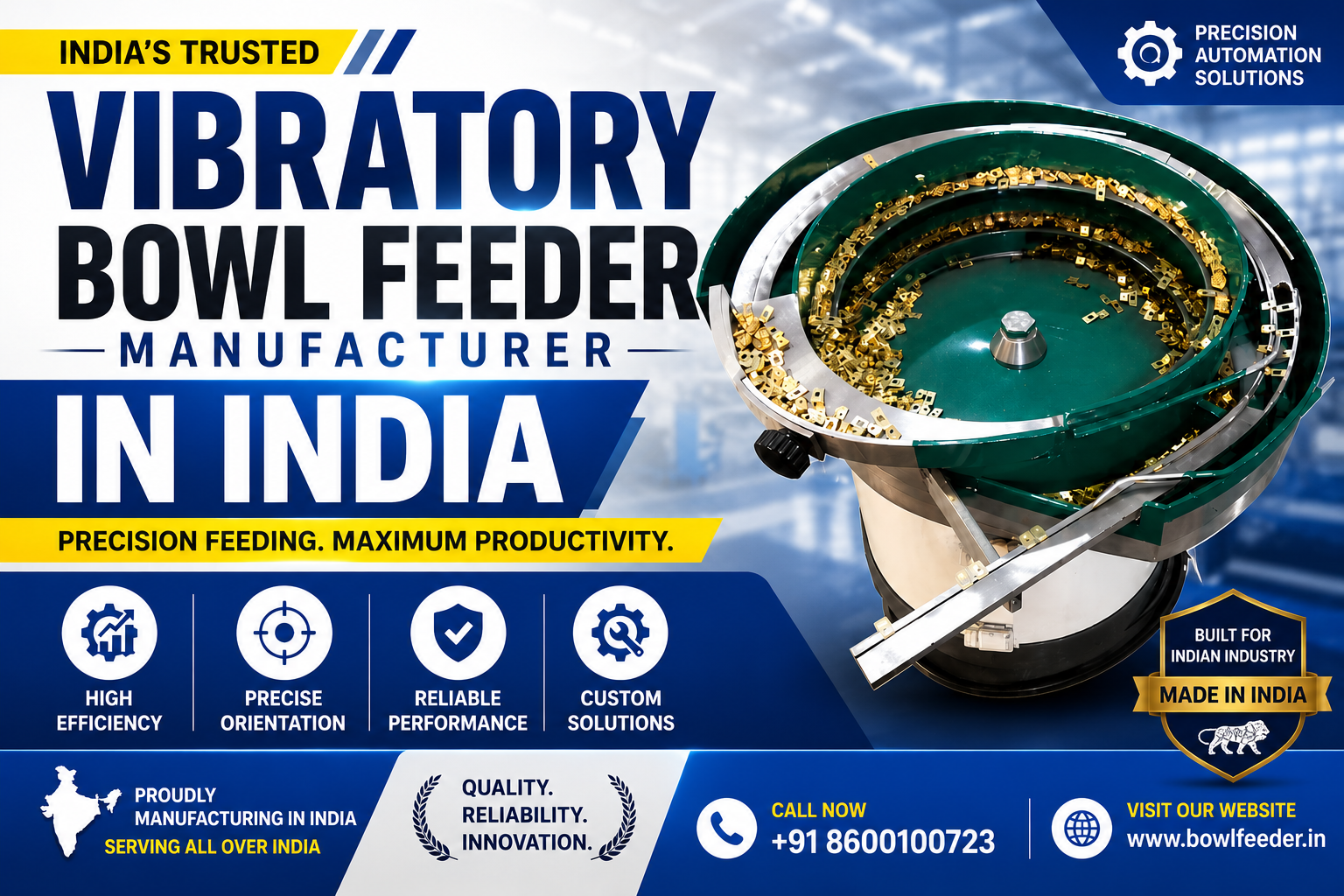
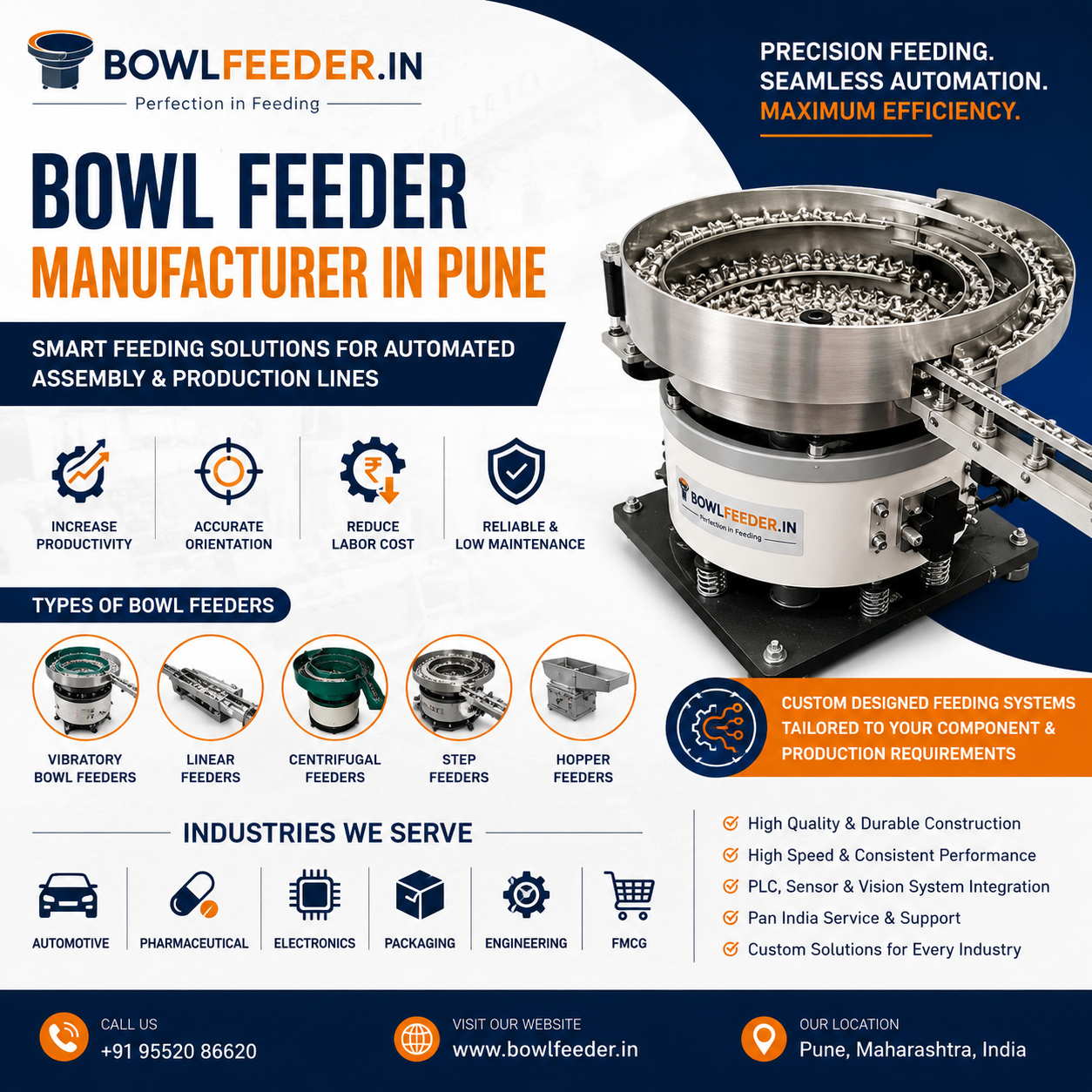
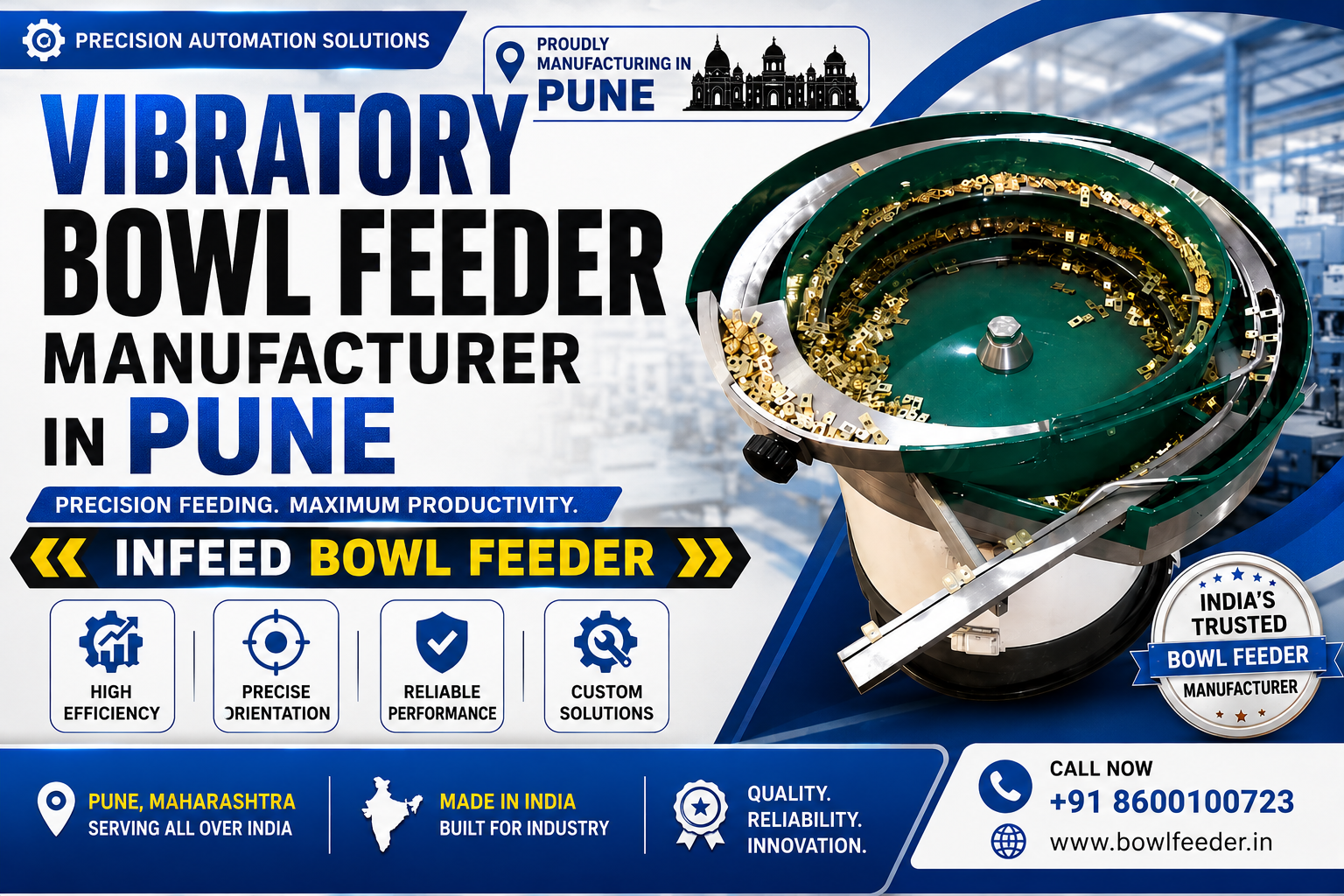
A bowl feeder is an automated parts handling device that sorts, orients, and feeds individual components from a bulk supply into a manufacturing or assembly line. The device uses vibration technology to move parts continuously through an ascending helical track, separating singles and positioning them for downstream processes.
Bowl feeders have been a cornerstone of industrial automation for decades, and modern systems are more efficient, reliable, and versatile than ever before.
How Do Bowl Feeders Work?
The operation of a bowl feeder is elegantly simple yet highly effective:
- Parts Loading – Bulk parts or components are loaded into the wide bowl at the base
- Vibration & Movement – Electromagnetic or pneumatic vibration moves parts up the helical track
- Orientation – Parts are positioned and oriented correctly by specially designed track features
- Separation – Single parts are separated from bunches and jams
- Discharge – Properly oriented, individual parts are fed onto the main production line
This continuous, automated process eliminates manual handling and reduces worker fatigue while improving throughput and consistency.
Types of Bowl Feeders
Bowl feeders come in various configurations, each designed for specific applications:
Standard Vibratory Bowl Feeders
The most common type, using electromagnetic vibration to move parts upward. Ideal for medium-sized components in high-volume production.
High-Speed Bowl Feeders
Engineered for rapid acceleration and discharge rates, suitable for high-volume assembly lines requiring speeds of 80+ parts per minute.
Enclosed Bowl Feeders
Featuring protective covers, these are ideal for hygiene-sensitive industries like food, pharmaceutical, and cosmetics manufacturing.
Custom Bowl Feeders
Tailored designs for irregularly shaped, fragile, or specialized components that standard feeders cannot handle effectively.
Electrostatic Bowl Feeders
Using electrical charge to handle small, lightweight parts that may be damaged by mechanical vibration.
Pneumatic Bowl Feeders
Air-powered systems offering quiet operation and clean environments, popular in cleanroom and pharmaceutical settings.
Key Benefits of Industrial Bowl Feeders
Investing in a bowl feeder system offers multiple advantages:
1. Increased Productivity Automated feeding increases output significantly compared to manual part handling. Modern bowl feeders can process hundreds of parts per minute depending on component size.
2. Improved Consistency Every part is fed and oriented identically, reducing quality variations and rework.
3. Cost Savings By reducing labor costs and minimizing part damage, bowl feeders quickly pay for themselves through improved efficiency.
4. Enhanced Worker Safety Automation reduces repetitive motion injuries and removes workers from hazardous tasks.
5. Better Quality Control Consistent part presentation allows downstream machinery to operate with higher accuracy and fewer jams.
6. Space Efficiency Vertical design means bowl feeders occupy minimal floor space while providing substantial capacity.
7. Flexibility Most bowl feeders can be adjusted or retooled for different part sizes and shapes with minimal downtime.
Applications Across Industries
Bowl feeders serve critical roles in numerous industries:
- Automotive – Feeding fasteners, connectors, sensors, and stampings
- Electronics – Handling resistors, capacitors, diodes, and circuit board components
- Pharmaceuticals – Feeding tablets, capsules, and packaging components in controlled environments
- Consumer Goods – Orienting buttons, zippers, and small plastic parts
- Appliances – Feeding springs, clips, fasteners, and micro-components
- Medical Devices – Precise feeding of sterile and sensitive components
- Packaging – Delivering caps, closures, and containers to filling equipment
Choosing the Right Bowl Feeder
Selecting the appropriate bowl feeder involves considering several factors:
Part Size & Weight Larger, heavier parts require more powerful vibratory systems and larger bowls.
Part Geometry Irregular, delicate, or sticky parts may require specialized design features or custom tooling.
Required Throughput Production volume determines the feeder size and speed capabilities needed.
Material & Surface Properties Fragile parts may require gentler handling; magnetic materials might benefit from specific track designs.
Space Constraints Standard or compact designs depending on your available floor space.
Environmental Conditions Temperature, humidity, contamination levels, and hygiene requirements influence material selection and design.
Budget Considerations Standard models offer cost-effectiveness, while custom systems provide optimized performance.
Maintenance & Longevity
Proper maintenance ensures your bowl feeder operates reliably for years:
- Regular Inspection – Check for wear on the helical track and bowl interior
- Cleaning – Remove accumulated dust and debris that could affect performance
- Lubrication – Use recommended lubricants on moving parts (if applicable)
- Vibration Monitoring – Ensure electromagnetic or pneumatic systems function properly
- Track Replacement – Replace worn track inserts before they damage parts or affect accuracy
Well-maintained bowl feeders can operate efficiently for 10-15+ years with minimal issues.
Trends in Bowl Feeder Technology
Modern bowl feeder systems are evolving:
- Smart Monitoring – IoT-enabled systems that track performance metrics and alert operators to maintenance needs
- Improved Materials – Advanced wear-resistant coatings and materials extending service life
- Energy Efficiency – Optimized electromagnetic systems reducing power consumption
- Precision Feeding – Enhanced designs for ultra-precise part positioning in high-tech manufacturing
- Modular Designs – Quick-changeover systems allowing rapid retooling for different components
Conclusion
Bowl feeders remain one of the most cost-effective and reliable automation solutions for modern manufacturing. By automating parts handling and orientation, they increase productivity, improve quality, and reduce labor costs—while allowing your team to focus on higher-value tasks.
Whether you’re looking to upgrade an existing line, launch a new production run, or optimize your current processes, the right bowl feeder system can transform your manufacturing efficiency.
Ready to explore bowl feeder solutions for your operation? Contact our team of manufacturing automation experts today to discuss your specific requirements and find the perfect feeding system for your production line.