Top 10 Industries Using Bowl Feeders for Automation in 2026
Introduction
Automation continues to transform manufacturing processes across the globe. In 2026, industries are focusing more than ever on improving productivity, reducing labor costs, increasing accuracy, and maintaining consistent product quality. One of the most important automation components helping manufacturers achieve these goals is the Industrial Bowl Feeder.
India’s No. 1
Bowl Feeder Manufacturer
Bowl feeders are widely used for sorting, orienting, and feeding components automatically into assembly lines, packaging machines, inspection systems, and robotic workstations. Whether it is a small electronic component or a large automotive part, bowl feeders ensure a continuous and reliable supply of parts without human intervention.
In this article, we will explore the Top 10 Industries Using Bowl Feeders for Automation in 2026, their applications, benefits, and why vibratory bowl feeders remain essential for modern manufacturing.
What is a Bowl Feeder?
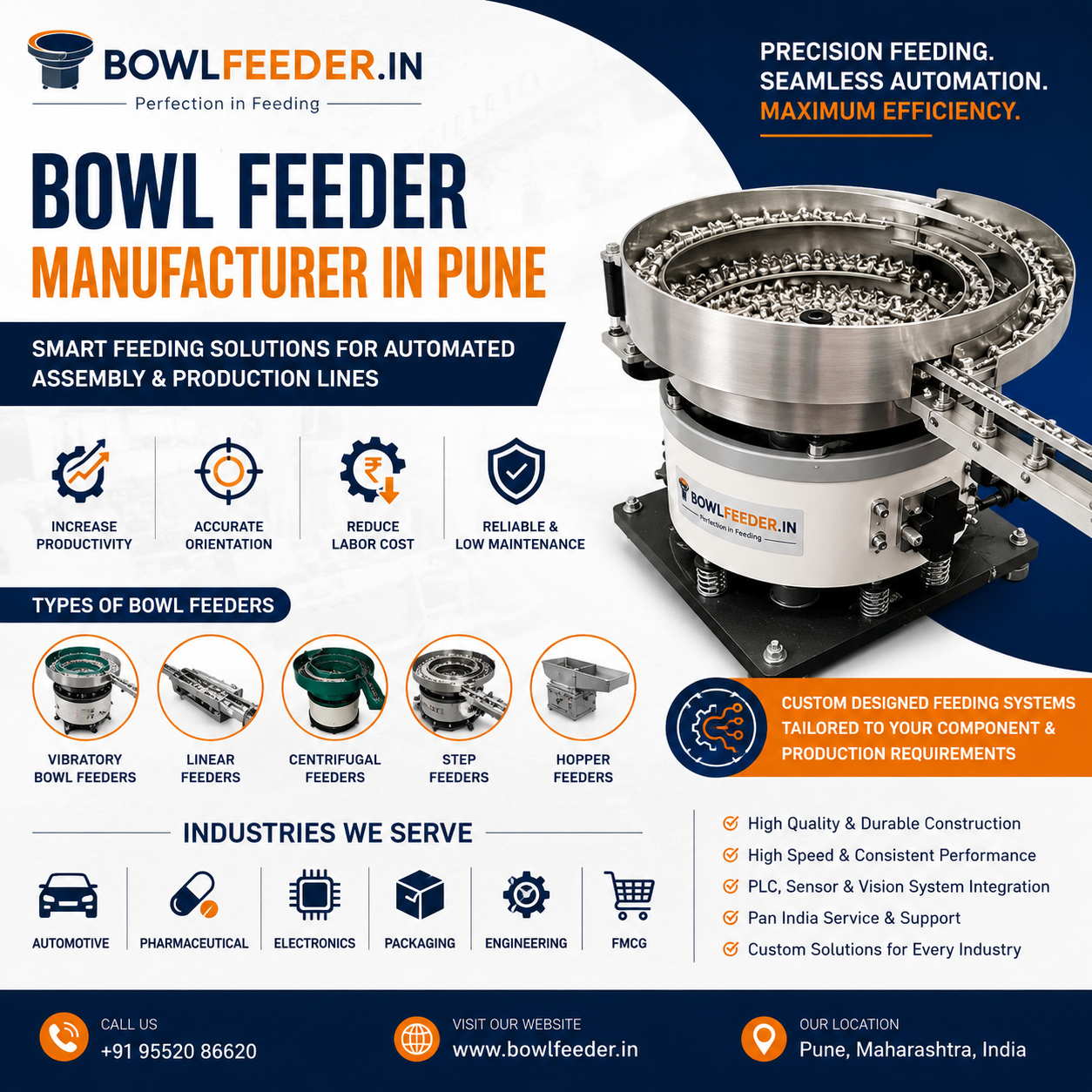
A bowl feeder is an automated feeding system designed to sort, orient, and deliver components in a specific position for downstream manufacturing processes. Most systems include:
- Vibratory Bowl Feeder
- Linear Feeder
- Storage Hopper
- Controller
- Vision Inspection System
- Pick and Place Unit
These systems eliminate manual feeding operations and improve production efficiency significantly.
1. Automotive Industry
The automotive sector remains one of the largest users of bowl feeder automation systems.
Applications
- Nut feeding
- Bolt feeding
- Screw feeding
- Washer feeding
- O-ring feeding
- Bearing feeding
- Sensor assembly
- Fuel injector components
Benefits
- High-speed assembly
- Reduced labor dependency
- Improved assembly accuracy
- Consistent production quality
Modern automotive manufacturing plants use customized vibratory bowl feeders integrated with robotic assembly systems to achieve maximum throughput.
2. Electronics Manufacturing Industry
Electronics manufacturing requires precision handling of small and delicate components.
Applications
- Connector feeding
- Capacitor feeding
- Resistor feeding
- Micro switch assembly
- PCB component handling
- USB connector assembly
Benefits
- Precise orientation
- Damage-free handling
- Increased production speed
- Enhanced quality control
As consumer electronics demand continues to rise in 2026, bowl feeders play a crucial role in automated electronic assembly lines.
3. Pharmaceutical Industry
The pharmaceutical sector relies heavily on automation to maintain hygiene and regulatory compliance.
Applications
- Capsule feeding
- Tablet feeding
- Medical device assembly
- Syringe component feeding
- Inhaler assembly
Benefits
- Hygienic operation
- High accuracy
- Reduced contamination risk
- GMP compliance support
Stainless steel vibratory bowl feeders are commonly used because they meet strict pharmaceutical manufacturing standards.
4. Medical Device Manufacturing
Medical device manufacturers require precise and reliable feeding systems.
Applications
- Surgical instrument assembly
- Catheter component feeding
- Diagnostic equipment assembly
- Disposable medical products
Benefits
- Precision component handling
- Reduced assembly errors
- Improved product consistency
- Faster production cycles
The growing healthcare industry is driving increased demand for automated bowl feeding solutions worldwide.
5. Fastener Manufacturing Industry
Fasteners are among the most common components handled by bowl feeders.
Applications
- Screw feeding
- Bolt feeding
- Rivet feeding
- Nut feeding
- Washer feeding
Benefits
- High-speed sorting
- Automatic orientation
- Reduced manual labor
- Improved assembly efficiency
Many manufacturers use dedicated screw bowl feeders for automated tightening and assembly operations.
6. Packaging Industry
Packaging lines require continuous feeding of components to maintain productivity.
Applications
- Bottle cap feeding
- Closure feeding
- Trigger sprayer assembly
- Packaging component feeding
- Labeling machine integration
Benefits
- Faster packaging operations
- Reduced downtime
- Consistent product flow
- Improved production output
Bowl feeders help packaging companies achieve high-volume production with minimal interruptions.
7. Consumer Goods Manufacturing
Manufacturers of household products increasingly rely on automated feeding systems.
Applications
- Plastic component assembly
- Cosmetic packaging
- Household appliance assembly
- Toy manufacturing
Benefits
- Increased productivity
- Better product consistency
- Reduced labor costs
- Faster assembly operations
Consumer product manufacturers utilize bowl feeders to handle millions of small components every day.
8. Electrical Equipment Industry
Electrical product manufacturing requires accurate component feeding for assembly processes.
Applications
- Switch assembly
- Socket assembly
- MCB assembly
- Relay component feeding
- Terminal block assembly
Benefits
- Consistent component orientation
- Improved assembly speed
- Reduced rejection rates
- Better production control
Automated electrical assembly lines depend heavily on vibratory feeding systems.
9. Aerospace Industry
The aerospace sector requires exceptional precision and reliability.
Applications
- Fastener feeding
- Connector assembly
- Sensor component feeding
- Aircraft interior assembly
Benefits
- High precision
- Reliable feeding performance
- Traceable manufacturing processes
- Improved quality assurance
Although production volumes may be lower than automotive manufacturing, accuracy requirements are significantly higher.
10. Renewable Energy Industry
The renewable energy sector is growing rapidly in 2026.
Applications
- Solar panel component assembly
- Battery pack manufacturing
- EV battery assembly
- Wind turbine component feeding
Benefits
- Increased production efficiency
- Enhanced assembly accuracy
- Lower operational costs
- Support for high-volume manufacturing
As electric vehicles and renewable energy systems continue expanding globally, bowl feeders are becoming increasingly important.
Why Industries Prefer Vibratory Bowl Feeders in 2026
Manufacturers continue to choose vibratory bowl feeders because they offer:
High Production Speed
Bowl feeders can handle thousands of components per hour, significantly increasing manufacturing output.
Excellent Accuracy
Components are delivered in the correct orientation, reducing assembly errors.
Reduced Labor Costs
Automation minimizes manual handling requirements and operational expenses.
Consistent Performance
Bowl feeders provide uninterrupted feeding even during long production runs.
Easy Integration
Modern bowl feeders can be integrated with:
- Robots
- PLC systems
- Vision inspection systems
- Pick-and-place units
- Leak testing machines
- Assembly automation systems
Future Trends in Bowl Feeder Automation
Several technological advancements are shaping the future of bowl feeders:
AI-Based Vision Systems
Artificial intelligence improves component recognition and orientation accuracy.
Smart Monitoring
IoT-enabled systems provide real-time production monitoring.
Energy Efficient Designs
Manufacturers are developing low-power vibratory systems to reduce energy consumption.
Flexible Feeding Solutions
Advanced feeders can handle multiple component types with minimal changeover time.
Robotic Integration
Collaborative robots increasingly work alongside bowl feeders to create fully automated production cells.
Conclusion
Bowl feeders have become a fundamental part of industrial automation across numerous sectors. From automotive and electronics manufacturing to pharmaceuticals and renewable energy production, these feeding systems help companies improve productivity, maintain quality, and reduce operating costs.
As manufacturing technology continues evolving in 2026, the demand for high-performance vibratory bowl feeders, linear feeders, centrifugal feeders, and integrated automation systems will continue growing. Businesses investing in modern bowl feeder solutions gain a competitive advantage through faster production, greater precision, and enhanced operational efficiency.
If you are looking for reliable bowl feeder solutions for your manufacturing process, choosing a customized automation system can significantly improve your production performance and long-term profitability.
Focus Keyword
Top Industries Using Bowl Feeders
SEO Title
Top 10 Industries Using Bowl Feeders for Automation in 2026 | Complete Guide
Meta Description
Discover the top 10 industries using bowl feeders for automation in 2026. Learn applications, benefits, and how vibratory bowl feeders improve manufacturing efficiency.
URL Slug
top-industries-using-bowl-feeders-for-automation
Image Alt Text
Top 10 Industries Using Bowl Feeders for Automation in 2026
Tags
bowl feeder, vibratory bowl feeder, industrial bowl feeder, automation systems, feeder automation, screw feeder, nut feeder, bolt feeder, pharmaceutical automation, electronics assembly automation, automotive automation, medical device assembly, packaging automation, industrial automation solutions, bowl feeder manufacturer, linear feeder, centrifugal feeder, automatic feeding system, industrial feeding solutions, manufacturing automation
Excerpt
Explore the top 10 industries using bowl feeders for automation in 2026. Learn how vibratory bowl feeders improve productivity, accuracy, and manufacturing efficiency across various sectors.