Selecting the right feeding system is one of the most important decisions in any automation project. A properly chosen feeder improves productivity, ensures accurate part orientation, reduces downtime, and increases overall manufacturing efficiency.
India’s No. 1
Bowl Feeder Manufacturer
Among the most popular feeding technologies used in automated assembly systems are Vibratory Bowl Feeders and Centrifugal Feeders. Both systems are designed to orient and feed components automatically, but they operate differently and are suitable for different production requirements.
This detailed comparison will help manufacturers understand the differences between vibratory bowl feeders and centrifugal feeders so they can choose the best solution for their application.
What is a Vibratory Bowl Feeder?
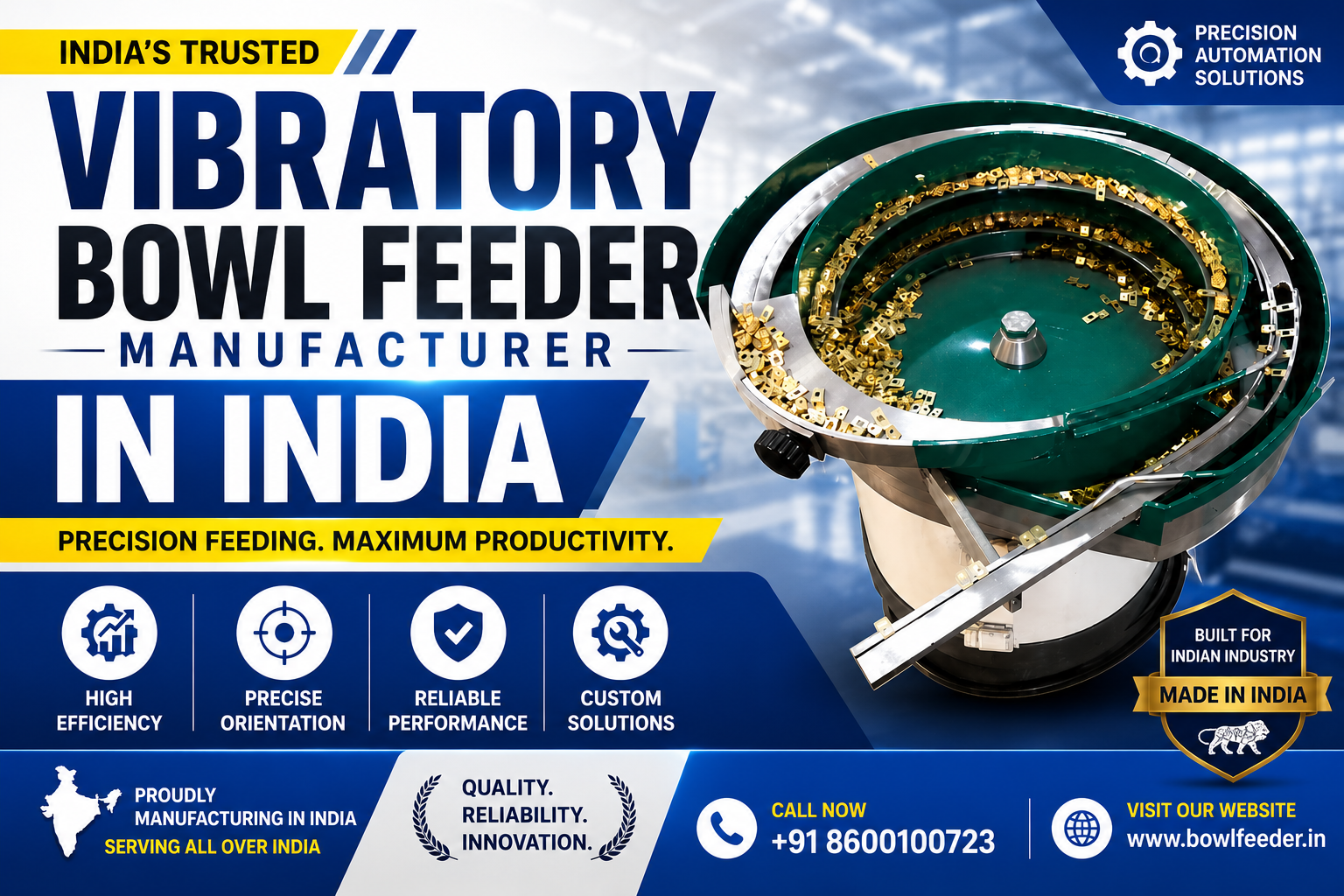
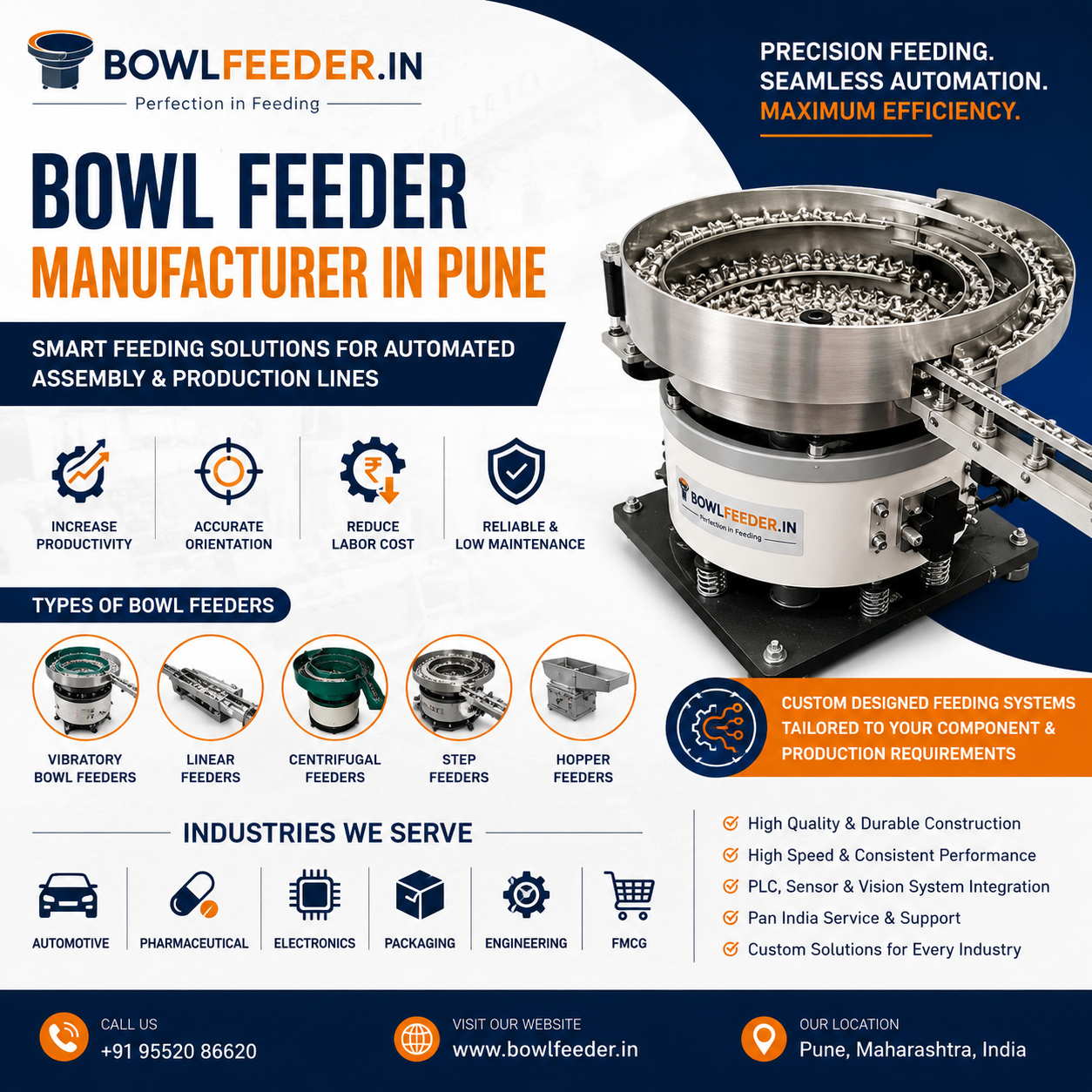
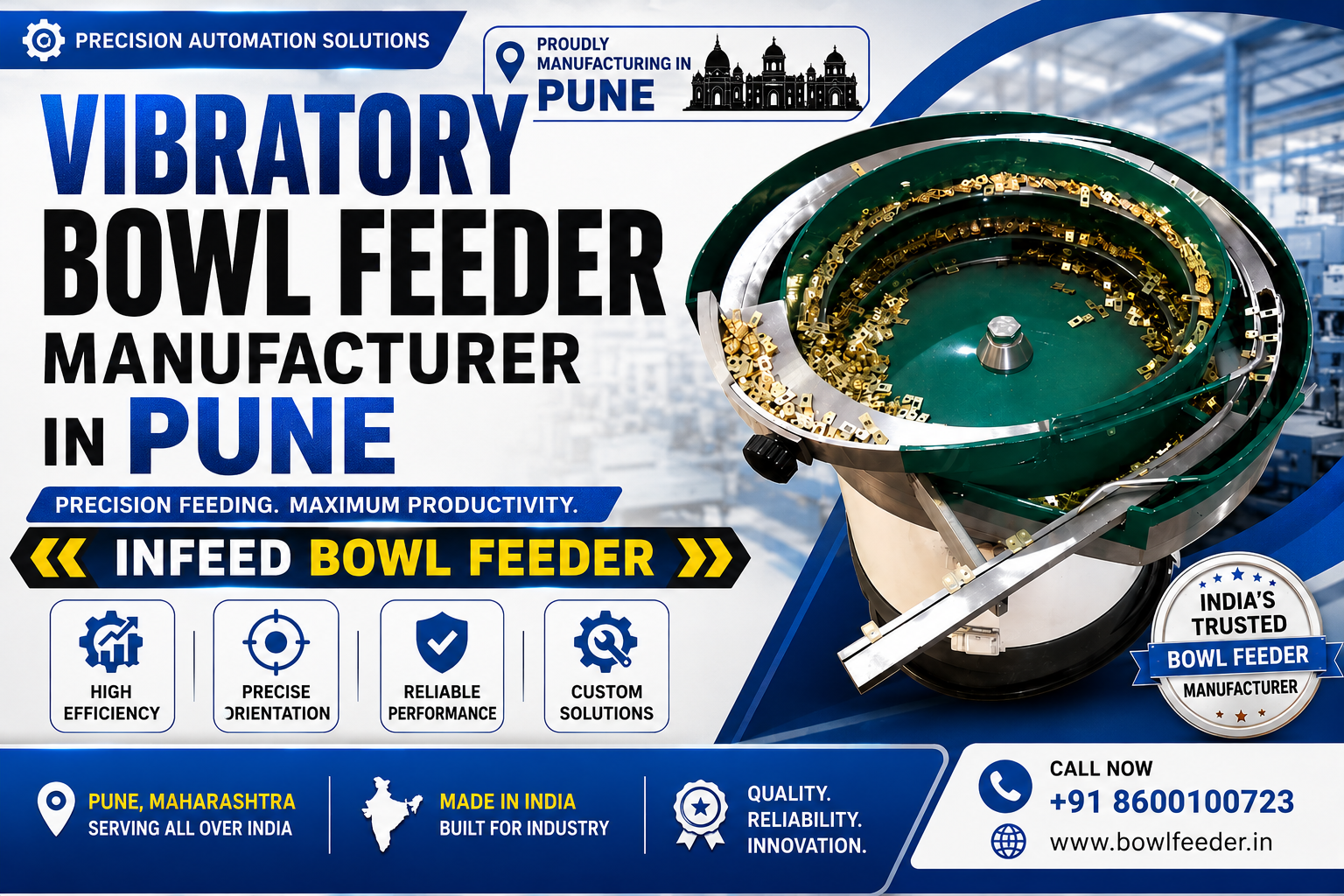
A Vibratory Bowl Feeder is an automated feeding system that uses controlled electromagnetic vibrations to move components along a specially designed track.
Parts are loaded into a bowl and gradually move upward through vibration. During this movement, tooling inside the bowl orients the components into the required position before delivering them to the assembly line.
Key Features
- High orientation accuracy
- Suitable for complex parts
- Custom-designed tooling
- Reliable operation
- Easy integration with automation systems
Common Applications
- Screw feeding systems
- Nut and bolt feeding
- Electronic component assembly
- Automotive manufacturing
- Medical device production
What is a Centrifugal Feeder?
A Centrifugal Feeder uses rotational force rather than vibration to move and orient parts. Components are placed inside a rotating disc or bowl, where centrifugal force moves them toward the outer edge and into orientation tracks.
These systems are known for extremely high feeding speeds and smooth component handling.
Key Features
- High-speed operation
- Low noise levels
- Smooth component movement
- Suitable for lightweight parts
- Minimal vibration
Common Applications
- Pharmaceutical packaging
- Cosmetic packaging
- Plastic closures
- Caps and lids
- Medical components
Working Principle Comparison
Vibratory Bowl Feeder
- Components are loaded into the bowl.
- Electromagnetic vibrations move parts upward.
- Tooling orients the parts.
- Incorrectly positioned components return to the bowl.
- Correctly oriented parts exit through a linear feeder.
Centrifugal Feeder
- Components enter a rotating bowl.
- Centrifugal force moves parts outward.
- Orientation devices guide components.
- Parts are transferred to the assembly process.
- Continuous high-speed feeding is achieved.
Vibratory Bowl Feeder vs Centrifugal Feeder
| Feature | Vibratory Bowl Feeder | Centrifugal Feeder |
|---|---|---|
| Feeding Method | Electromagnetic Vibration | Rotational Motion |
| Feeding Speed | Medium to High | Very High |
| Noise Level | Moderate | Low |
| Part Handling | Suitable for various parts | Best for lightweight parts |
| Orientation Complexity | Excellent | Moderate |
| Flexibility | High | Medium |
| Tooling Customization | Extensive | Limited |
| Maintenance | Low | Low |
| Cost | Moderate | Higher Initial Cost |
| Accuracy | Very High | High |
Advantages of Vibratory Bowl Feeders
1. Handles Complex Components
Vibratory feeders can orient irregularly shaped and complex components with excellent accuracy.
2. Cost-Effective Solution
For many applications, vibratory feeders provide the best balance between performance and investment.
3. High Flexibility
These feeders can be customized for a wide range of component sizes and shapes.
4. Proven Technology
Vibratory bowl feeders have been used successfully in manufacturing industries for decades.
Advantages of Centrifugal Feeders
1. Extremely High Speed
Centrifugal feeders can achieve significantly higher feeding rates than traditional vibratory systems.
2. Quiet Operation
The absence of continuous vibration results in lower operating noise.
3. Gentle Component Handling
Delicate plastic and lightweight components experience less wear and damage.
4. Ideal for High-Volume Production
They are widely used in industries requiring millions of parts annually.
When Should You Choose a Vibratory Bowl Feeder?
A Vibratory Bowl Feeder is the better choice when:
- Components have complex shapes.
- Multiple orientations are required.
- Production speeds are moderate to high.
- Budget considerations are important.
- Flexibility is a priority.
- You need a customized feeding solution.
Best Industries
- Automotive
- Electronics
- Engineering
- Fastener Manufacturing
- Industrial Assembly
When Should You Choose a Centrifugal Feeder?
A Centrifugal Feeder is the better choice when:
- Extremely high feeding speed is required.
- Components are lightweight.
- Low-noise operation is important.
- Product handling must be gentle.
- Production volume is very high.
Best Industries
- Pharmaceutical
- Cosmetic
- Packaging
- Medical Devices
- Consumer Goods
Cost Comparison
Generally, vibratory bowl feeders have a lower initial investment compared to centrifugal feeders.
However, the total cost depends on:
- Component complexity
- Feeding speed requirements
- Tooling requirements
- Integration needs
- Future production expansion
For high-volume production environments, centrifugal feeders often provide a better long-term return on investment despite higher initial costs.
Which Feeder is Best for Your Business?
There is no single feeder that is ideal for every application.
Choose a Vibratory Bowl Feeder if you need:
- Versatility
- High orientation accuracy
- Cost-effective automation
- Complex component handling
Choose a Centrifugal Feeder if you need:
- Ultra-high feeding speeds
- Quiet operation
- Lightweight component handling
- Large-scale production capacity
The final decision should be based on your component characteristics, production targets, and automation requirements.
Why Choose BowlFeeder.in?
At BowlFeeder.in, we design and manufacture customized feeding solutions tailored to your production needs.
Our product range includes:
- Vibratory Bowl Feeders
- Centrifugal Feeders
- Linear Feeders
- Step Feeders
- Storage Hoppers
- Vision Inspection Systems
- Complete Automation Solutions
Our engineering team helps customers select the most efficient feeding technology for maximum productivity and long-term performance.
Conclusion
Both Vibratory Bowl Feeders and Centrifugal Feeders play a critical role in modern industrial automation. Vibratory feeders provide exceptional flexibility, accuracy, and cost-effectiveness, while centrifugal feeders excel in high-speed and high-volume production environments.
Understanding your production requirements, component characteristics, and future growth plans will help you choose the right feeder system. Investing in the correct feeding technology can significantly improve manufacturing efficiency, reduce downtime, and enhance overall production performance.