In modern manufacturing industries, automation plays a crucial role in increasing productivity, reducing labor costs, and maintaining consistent product quality. One of the most important components used in automated assembly systems is the Industrial Bowl Feeder.
India’s No. 1
Bowl Feeder Manufacturer
Industrial bowl feeders are widely used for sorting, orienting, and feeding components automatically to assembly lines, robotic systems, packaging machines, and inspection stations. These systems ensure a continuous and controlled supply of parts, improving production efficiency and minimizing downtime.
This article explains the working principle, types, advantages, and applications of industrial bowl feeders in detail.
What is an Industrial Bowl Feeder?
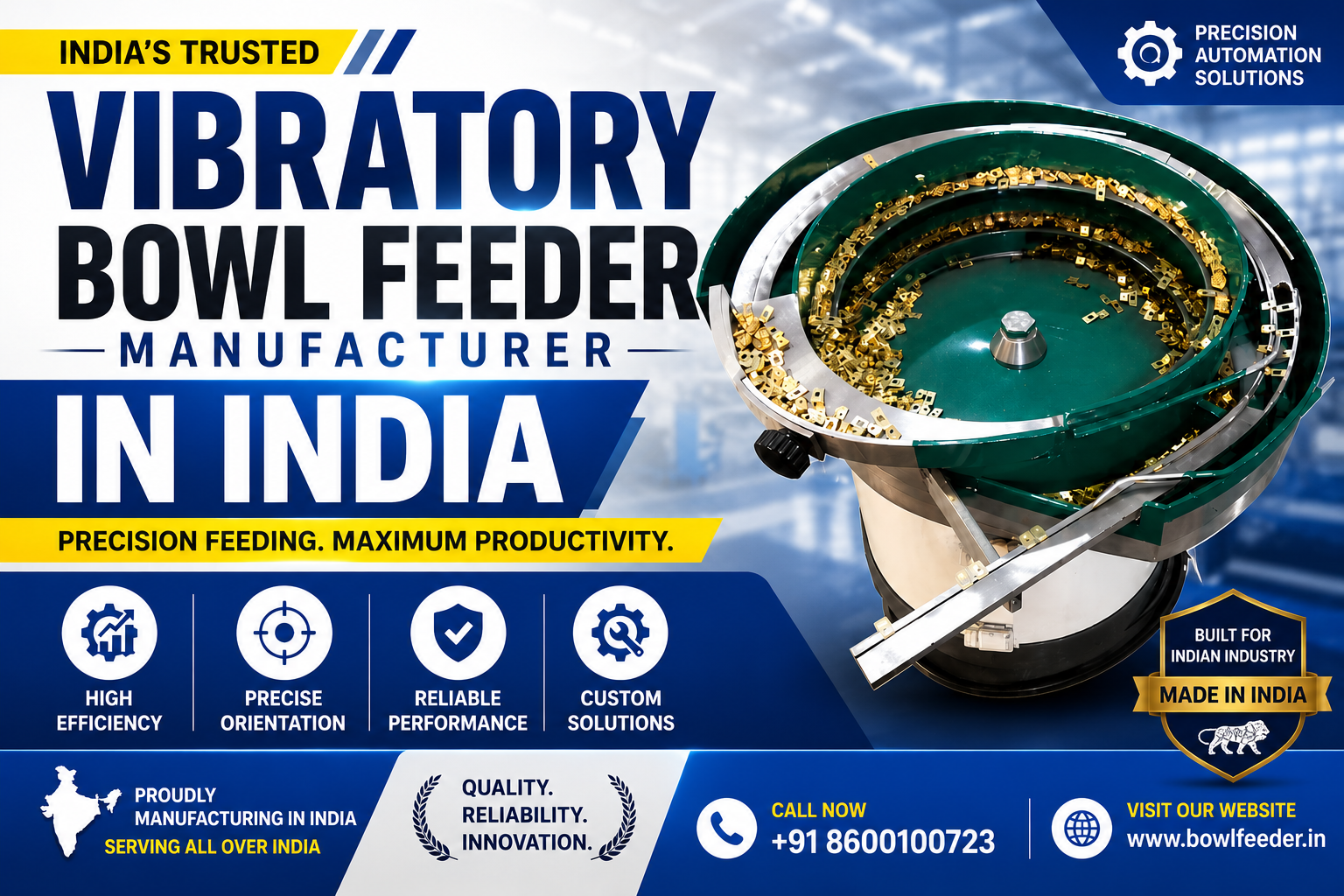
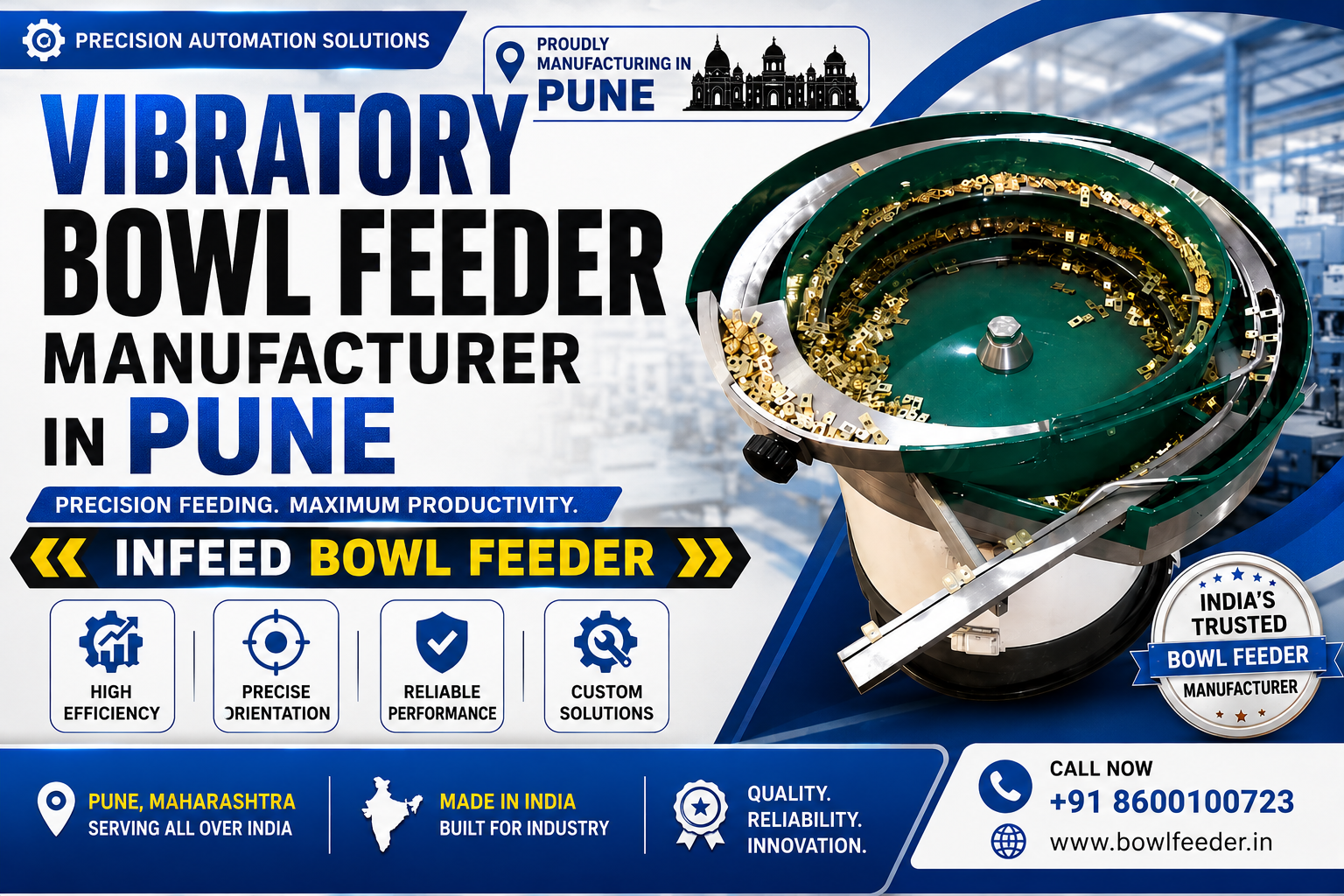
An Industrial Bowl Feeder is an automated feeding system designed to sort, orient, and deliver components in a specific position for further manufacturing or assembly processes.
The system consists of a vibratory bowl mounted on a base drive unit. Components are loaded into the bowl, and controlled vibrations move the parts along specially designed tracks until they reach the correct orientation and exit point.
Industrial bowl feeders are commonly used for feeding:
- Screws
- Nuts
- Bolts
- Washers
- Bearings
- Plastic Components
- Electronic Parts
- Automotive Components
- Medical Device Parts
Working Principle of Industrial Bowl Feeders
The working principle of a bowl feeder is based on controlled vibration.
Step 1: Component Loading
Bulk components are loaded into the feeder bowl manually or through a storage hopper.
Step 2: Vibratory Movement
An electromagnetic drive unit generates controlled vibrations. These vibrations create small forward movements that transport components upward along the bowl track.
Step 3: Part Orientation
Specially designed tooling and orientation devices remove incorrectly positioned parts and allow only properly oriented components to continue moving.
Step 4: Linear Feeding
After orientation, components are transferred to a linear feeder or conveyor system.
Step 5: Assembly Process
The correctly oriented parts are delivered to assembly machines, robotic pick-and-place systems, inspection stations, or packaging equipment.
This automated process ensures high-speed and error-free feeding of components.
Main Components of an Industrial Bowl Feeder
A complete bowl feeder system typically includes:
1. Vibratory Bowl
The bowl contains customized tracks designed according to the component shape and orientation requirements.
2. Base Drive Unit
The drive unit generates electromagnetic vibrations that move parts through the bowl.
3. Controller
The controller regulates vibration frequency and amplitude to optimize feeding performance.
4. Linear Feeder
Linear feeders transport oriented components from the bowl feeder to the assembly station.
5. Storage Hopper
Storage hoppers automatically replenish components into the bowl to maintain continuous production.
6. Sensor System
Sensors monitor part levels and feeding operations for smooth automation.
Types of Industrial Bowl Feeders
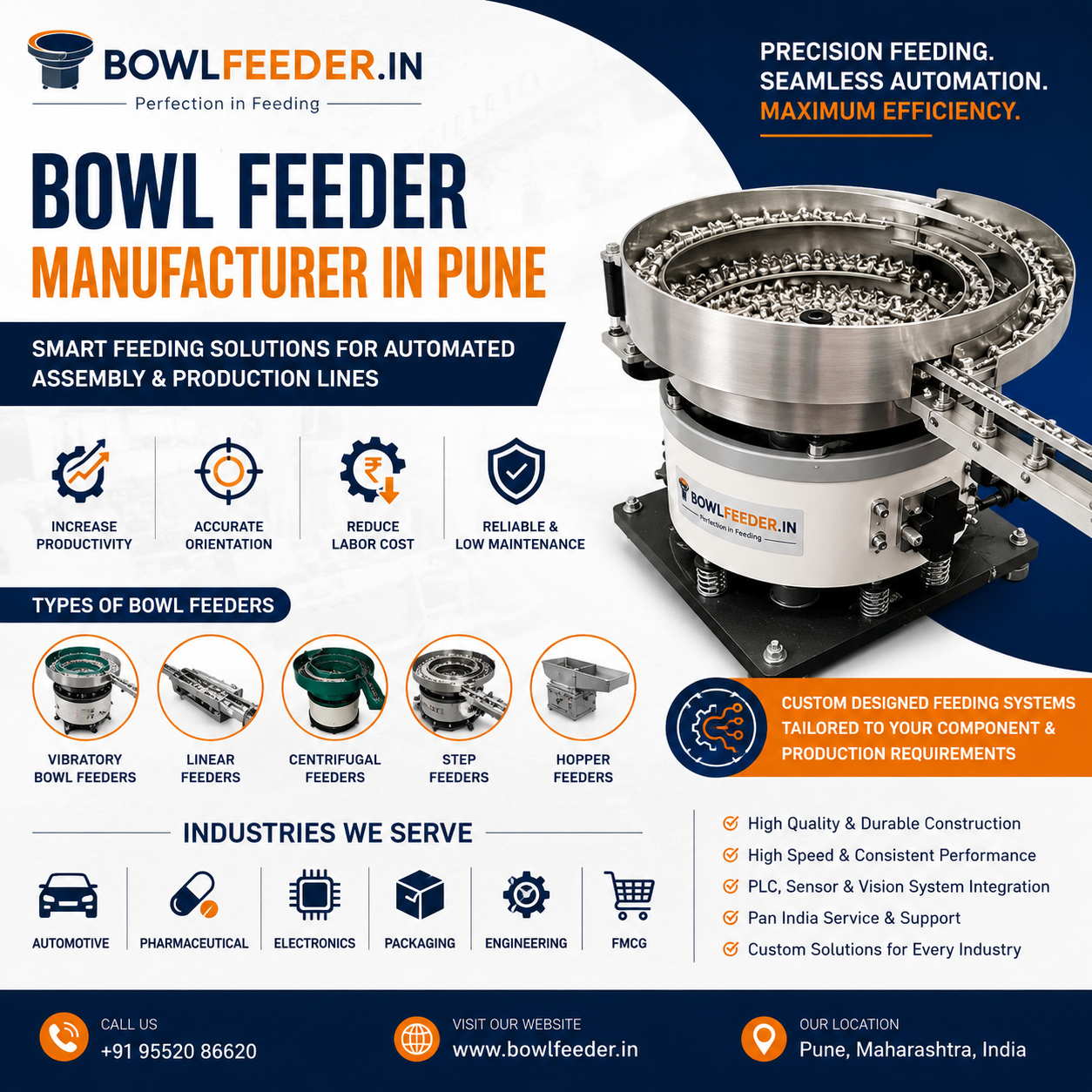
1. Vibratory Bowl Feeders
These are the most commonly used feeders in manufacturing industries.
Features:
- High feeding accuracy
- Suitable for small to medium-sized parts
- Cost-effective automation solution
- Easy integration with assembly machines
Applications:
- Automotive industry
- Electronics manufacturing
- Fastener feeding systems
2. Centrifugal Bowl Feeders
Centrifugal feeders use rotating motion instead of vibration.
Features:
- High-speed feeding
- Quiet operation
- Ideal for lightweight components
Applications:
- Pharmaceutical industry
- Cosmetic packaging
- Medical device manufacturing
3. Step Feeders
Step feeders use a lifting mechanism to move parts toward the feeding track.
Features:
- Low noise levels
- Gentle component handling
- Suitable for delicate parts
Applications:
- Medical components
- Plastic parts
- Electronic assemblies
4. Flexible Feeders
Flexible feeding systems combine vision technology, robotics, and programmable feeding mechanisms.
Features:
- Multiple component handling
- Quick product changeovers
- Smart automation capabilities
Applications:
- Industry 4.0 manufacturing
- Robotic assembly systems
- High-mix production environments
Advantages of Industrial Bowl Feeders
Increased Productivity
Industrial bowl feeders provide a continuous supply of components, reducing machine downtime and increasing production output.
Improved Accuracy
Correctly oriented parts reduce assembly errors and improve product quality.
Labor Cost Reduction
Automation minimizes manual handling and lowers labor requirements.
Consistent Performance
Bowl feeders maintain reliable operation throughout long production cycles.
Easy Integration
They can be integrated with:
- PLC systems
- Robotic arms
- Vision inspection systems
- Packaging equipment
Custom Design
Each bowl feeder can be customized according to component size, shape, and production requirements.
Applications of Industrial Bowl Feeders
Industrial bowl feeders are widely used across various industries.
Automotive Industry
Applications include feeding:
- Screws
- Bearings
- Clips
- Fasteners
- Bushes
Electronics Industry
Used for:
- Connectors
- Switches
- Pins
- Electronic assemblies
Pharmaceutical Industry
Applications include:
- Medical device components
- Syringe parts
- Caps and closures
Consumer Goods Manufacturing
Used in the assembly of:
- Appliances
- Toys
- Household products
Packaging Industry
Feeding and orienting:
- Caps
- Closures
- Plastic components
Aerospace Industry
High-precision feeding of critical components for aircraft assemblies.
Factors to Consider When Selecting an Industrial Bowl Feeder
Before choosing a bowl feeder, consider:
Component Characteristics
- Size
- Shape
- Weight
- Material
Production Rate
Determine the required parts per minute or parts per hour.
Orientation Requirements
Complex part orientations require specialized tooling.
Future Expansion
Select a feeder system that can accommodate production growth.
Automation Compatibility
Ensure compatibility with existing automation equipment.
Why Choose BowlFeeder.in?
At BowlFeeder.in, we manufacture high-quality industrial bowl feeders designed for maximum reliability and efficiency.
Our solutions include:
- Vibratory Bowl Feeders
- Centrifugal Feeders
- Linear Feeders
- Storage Hoppers
- Vision Inspection Systems
- Custom Automation Solutions
We provide customized feeding systems for automotive, electronics, pharmaceutical, packaging, and engineering industries across India.
Conclusion
Industrial bowl feeders are essential components of modern automated manufacturing systems. They improve productivity, reduce labor costs, increase accuracy, and ensure smooth production flow. Whether used in automotive assembly, electronics manufacturing, medical device production, or packaging lines, bowl feeders provide reliable and efficient component feeding solutions.
Investing in the right industrial bowl feeder can significantly enhance manufacturing performance and support long-term business growth. By understanding their working principles, types, and applications, manufacturers can choose the most suitable feeding solution for their automation requirements.
FAQ
Q. What is an industrial bowl feeder?
A. An industrial bowl feeder is an automated system used to orient and feed components for assembly operations.
Q. Which industries use bowl feeders?
A. Automotive, electronics, medical devices, packaging, pharmaceutical, and consumer goods industries.
Q. What are the benefits of bowl feeders?
A. Increased productivity, reduced labor costs, consistent part orientation, and improved production efficiency.