How Bowl Feeders Improve Production Efficiency by 40%+
Introduction
In today’s competitive manufacturing environment, production efficiency is the key to increasing profitability and meeting customer demands. Industries such as automotive, pharmaceutical, electronics, packaging, and consumer goods are constantly seeking automation solutions that reduce labor costs and increase productivity.
India’s No. 1
Bowl Feeder Manufacturer
One of the most effective automation components used in modern production lines is the Bowl Feeder System. By automatically orienting and feeding components to assembly machines, bowl feeders can improve production efficiency by 40% or more while significantly reducing downtime and human errors.
In this article, we will explore how bowl feeders enhance manufacturing efficiency and why industries worldwide rely on these automated feeding systems.
What is a Bowl Feeder?
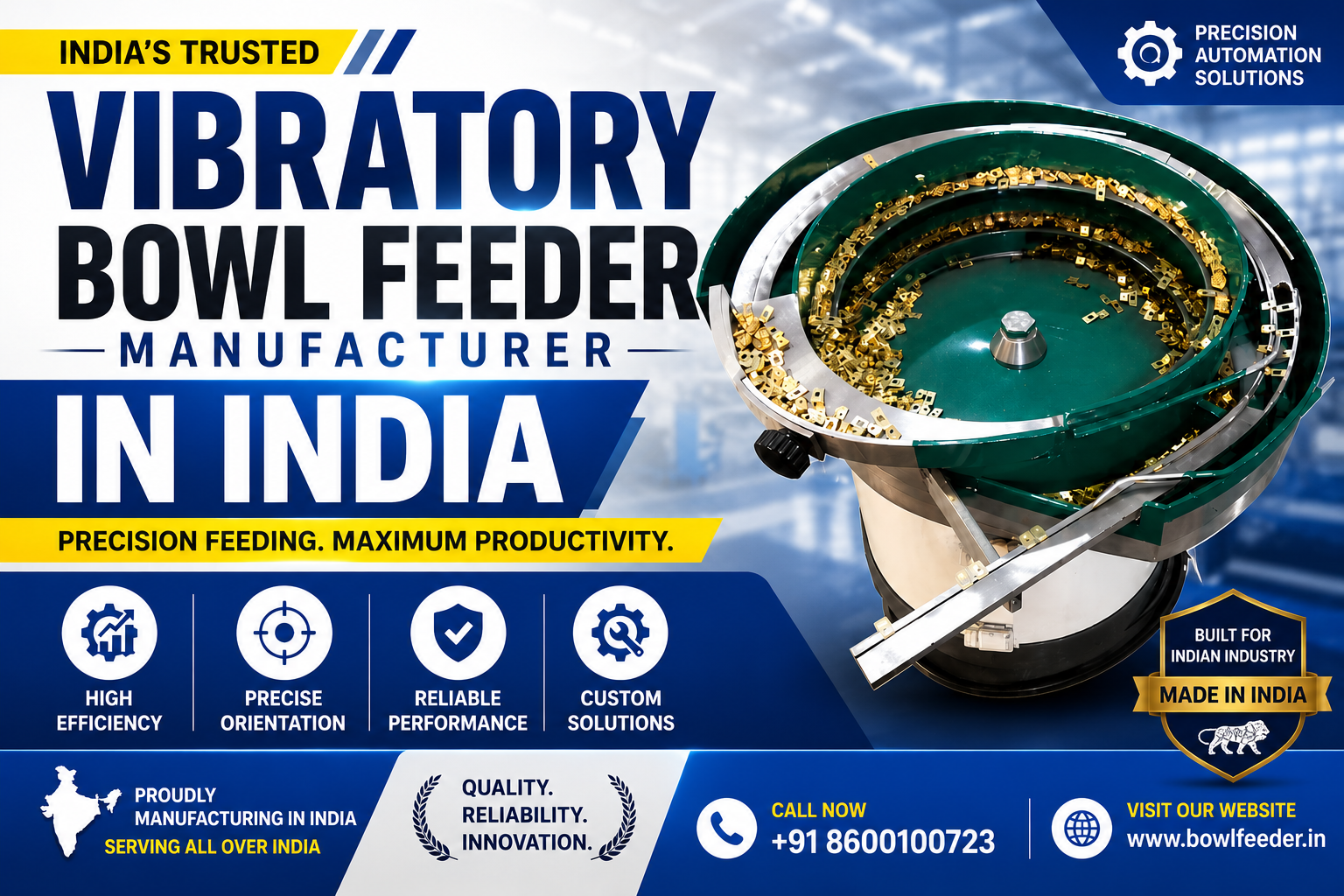
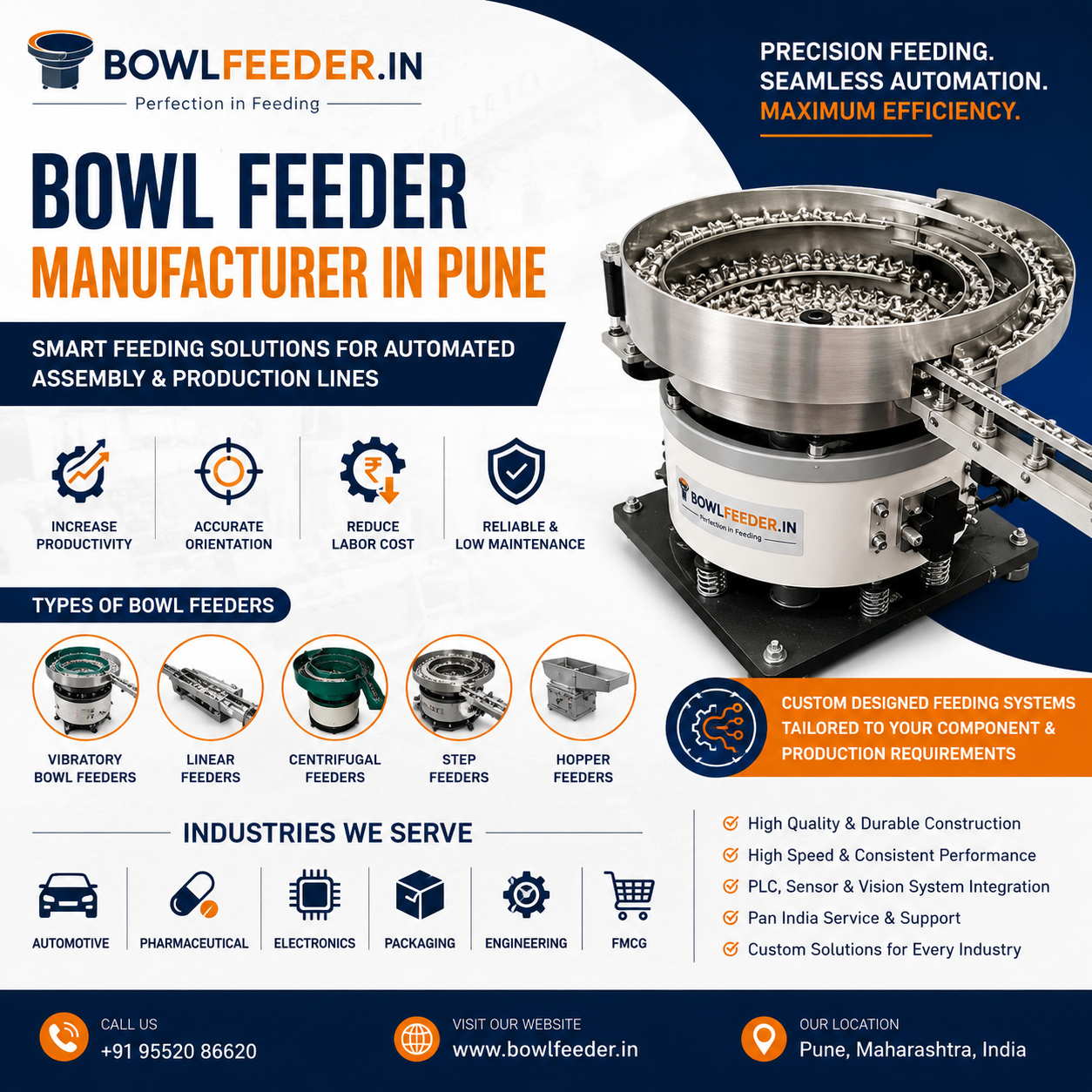
A bowl feeder is an automated feeding device designed to sort, orient, and deliver components in a specific position for downstream processes such as:
- Assembly
- Inspection
- Packaging
- Counting
- Welding
- Pick-and-place operations
A complete feeding system generally consists of:
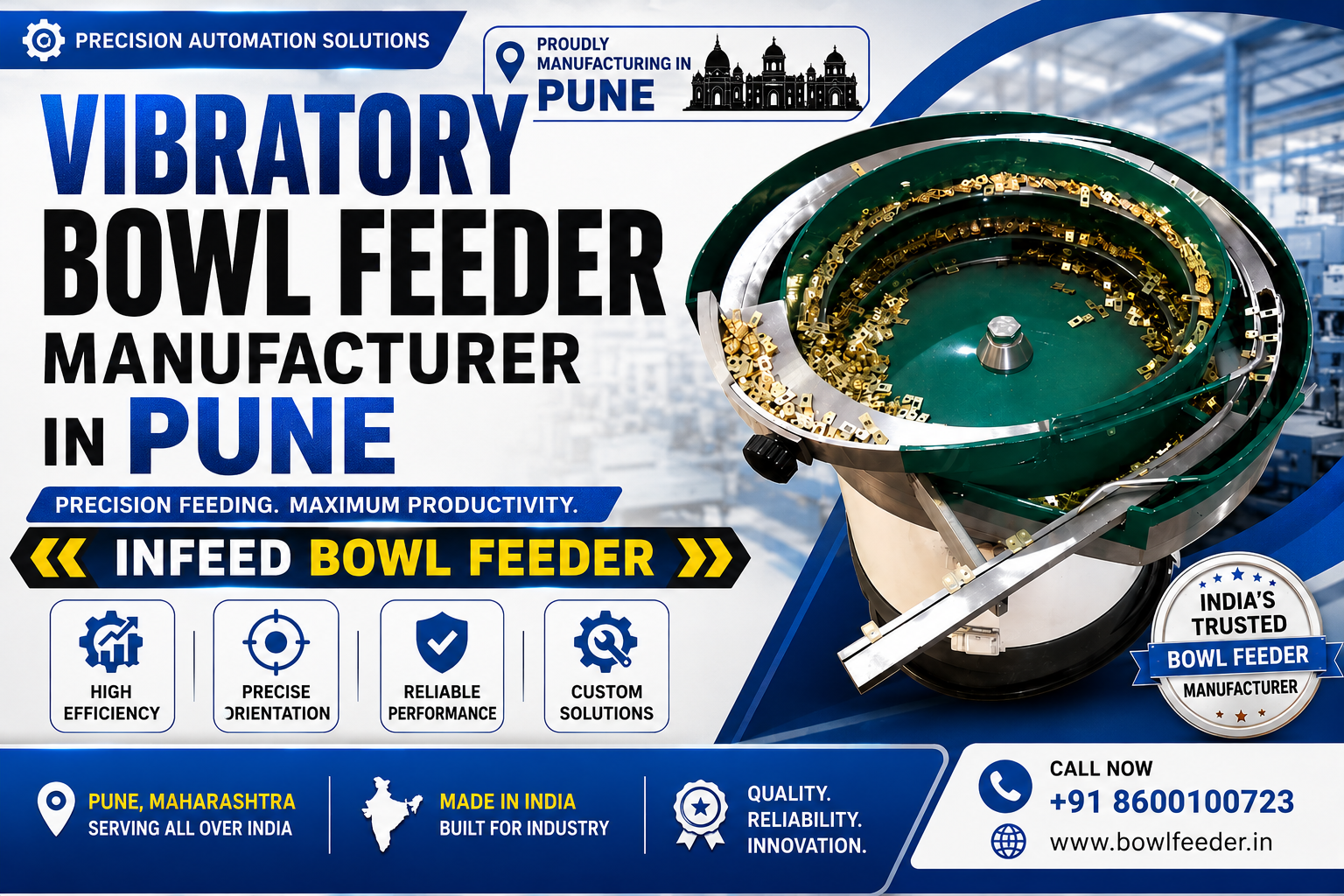
- Vibratory Bowl Feeder
- Linear Feeder
- Storage Hopper
- Escapement Unit
- Sensors and Controllers
- Vision Inspection System (Optional)
These systems ensure a continuous and reliable supply of components without manual intervention.
1. Eliminates Manual Feeding Operations
Manual feeding is time-consuming and inconsistent. Operators can become fatigued, resulting in slower production rates and increased errors.
Problems with Manual Feeding:
- Inconsistent component orientation
- Frequent machine stoppages
- Higher labor costs
- Increased rejection rates
How Bowl Feeders Help:
Bowl feeders automatically orient and deliver components continuously, allowing machines to operate without interruptions.
Efficiency Improvement: 15%–20%
2. Reduces Machine Downtime
Machine downtime directly impacts productivity and profits. Production lines often stop because operators cannot feed components quickly enough.
Bowl feeders provide:
- Continuous component supply
- Stable feeding speed
- Automatic replenishment through hoppers
- Reduced waiting time
As a result, machines spend more time producing parts and less time waiting for materials.
Efficiency Improvement: 10%–15%
3. Increases Production Speed
Modern vibratory and centrifugal bowl feeders can feed:
- Hundreds of parts per minute
- Thousands of components per hour
- Multiple component sizes with quick changeovers
High-speed feeding systems are particularly beneficial in:
- Automotive assembly lines
- Pharmaceutical packaging
- Electronics manufacturing
- Plastic component assembly
By maintaining a constant feed rate, production output increases dramatically.
Efficiency Improvement: 10%–20%
4. Improves Accuracy and Part Orientation
Incorrectly oriented components can lead to:
- Assembly failures
- Machine jams
- Product defects
- Increased rejection rates
Bowl feeders are engineered with precision tooling that ensures every component reaches the machine in the correct orientation.
Benefits:
- Improved product quality
- Fewer defects
- Reduced rework
- Higher customer satisfaction
Efficiency Improvement: 5%–10%
5. Reduces Labor Costs
One bowl feeder system can replace multiple manual operators responsible for:
- Sorting parts
- Orienting components
- Loading machines
Manufacturers benefit from:
- Lower manpower requirements
- Reduced training costs
- Better workforce utilization
- Lower operational expenses
The savings generated from labor reduction often provide a quick return on investment.
6. Enables 24/7 Automated Production
Industries increasingly demand uninterrupted production.
Bowl feeders support:
- Lights-out manufacturing
- Robotic assembly systems
- Continuous production cycles
- Higher machine utilization
Automated feeding systems can operate continuously with minimal supervision, significantly increasing annual production capacity.
7. Integrates Easily with Automation Systems
Modern bowl feeders can be integrated with:
- PLC Systems
- Robotic Arms
- Vision Inspection Systems
- Pick-and-Place Machines
- Assembly Machines
- Packaging Lines
Smart integration creates fully automated production environments with maximum efficiency and minimal human intervention.
Real Production Efficiency Gains
Manufacturers typically experience:
| Performance Metric | Improvement |
|---|---|
| Machine Uptime | 20%–30% |
| Production Output | 25%–50% |
| Labor Cost Reduction | 20%–40% |
| Defect Reduction | 15%–30% |
| Overall Efficiency | 40%+ |
The exact improvement depends on component type, production volume, and the automation level of the manufacturing line.
Industries Benefiting from Bowl Feeders
Automotive Industry
- Fastener feeding
- Bush feeding
- Bearing feeding
- Clip feeding
- Sensor assembly
Pharmaceutical Industry
- Caps feeding
- Syringe component feeding
- Vial feeding
- Medical device assembly
Electronics Industry
- Connector feeding
- Small component orientation
- Terminal feeding
Plastic Industry
- Cap feeding
- Injection molded component assembly
- Packaging applications
Why Invest in Bowl Feeders?
A bowl feeder is not merely a feeding device—it is a productivity enhancement system that delivers:
✅ Faster production cycles
✅ Reduced labor costs
✅ Higher machine uptime
✅ Improved product quality
✅ Lower rejection rates
✅ Consistent component orientation
✅ Increased profitability
For manufacturers seeking to improve productivity and remain competitive, investing in an automated bowl feeding system can easily result in 40% or more production efficiency improvement.
Conclusion
As manufacturing moves toward Industry 4.0 and smart automation, bowl feeders have become an essential component of high-efficiency production lines. By eliminating manual handling, reducing downtime, and ensuring consistent part feeding, bowl feeder systems help industries achieve higher productivity, lower operating costs, and superior product quality.
If your production line still relies on manual component feeding, implementing an automated bowl feeder system could be the single most effective step toward achieving a 40%+ increase in production efficiency.
Need a Custom Bowl Feeder Solution?
–BowlFeeder.in
✔ Vibratory Bowl Feeders
✔ Linear Feeders
✔ Centrifugal Feeders
✔ Step Feeders
✔ Complete Feeding Systems
✔ Custom Automation Solutions
Website: www.bowlfeeder.in
Email: sales@bowlfeeder.in