If you’ve ever watched a production line where tiny screws, caps, springs, or connectors magically arrange themselves in a single orderly line before being picked up by a robot or assembly machine, you’ve seen a spiral bowl feeder at work. This unassuming piece of equipment is one of the quiet workhorses of industrial automation — and understanding how it’s designed, why it matters, and where it’s used can help manufacturers make smarter sourcing and integration decisions.
India’s No. 1
Bowl Feeder Manufacturer
In this guide, we’ll break down the engineering behind spiral bowl feeders, the business case for using them, and the industries that depend on them every single day.
What Is a Spiral Bowl Feeder?
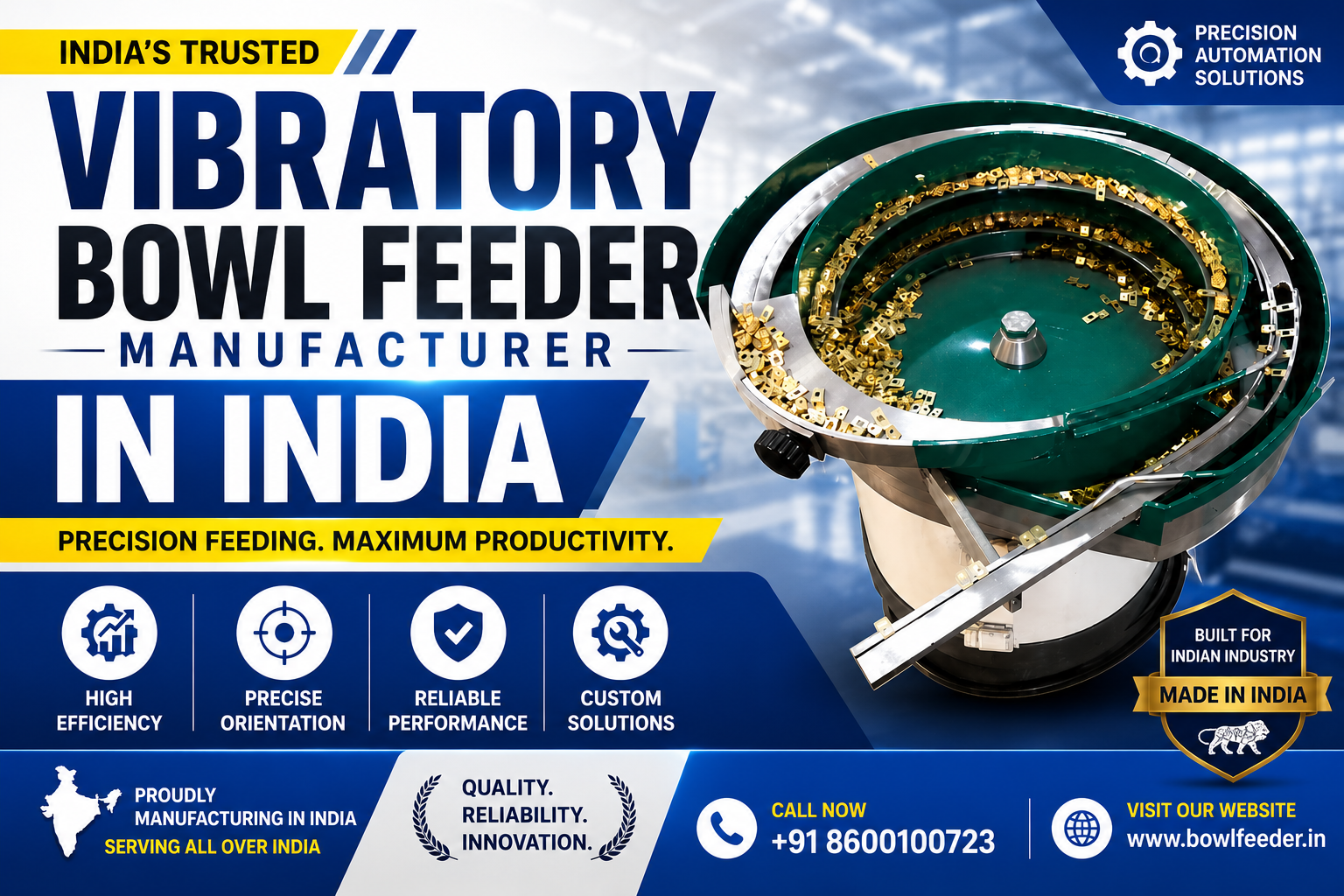
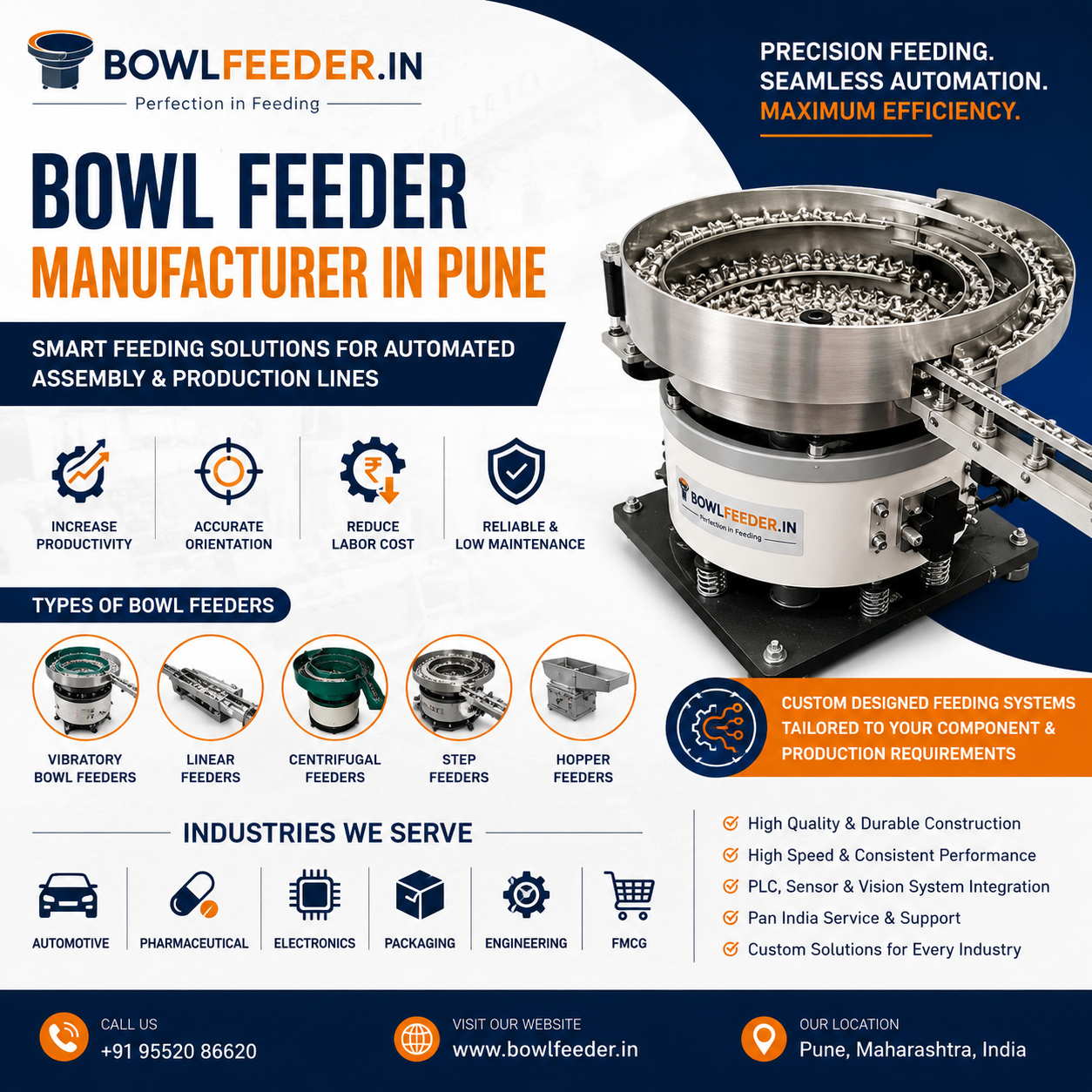
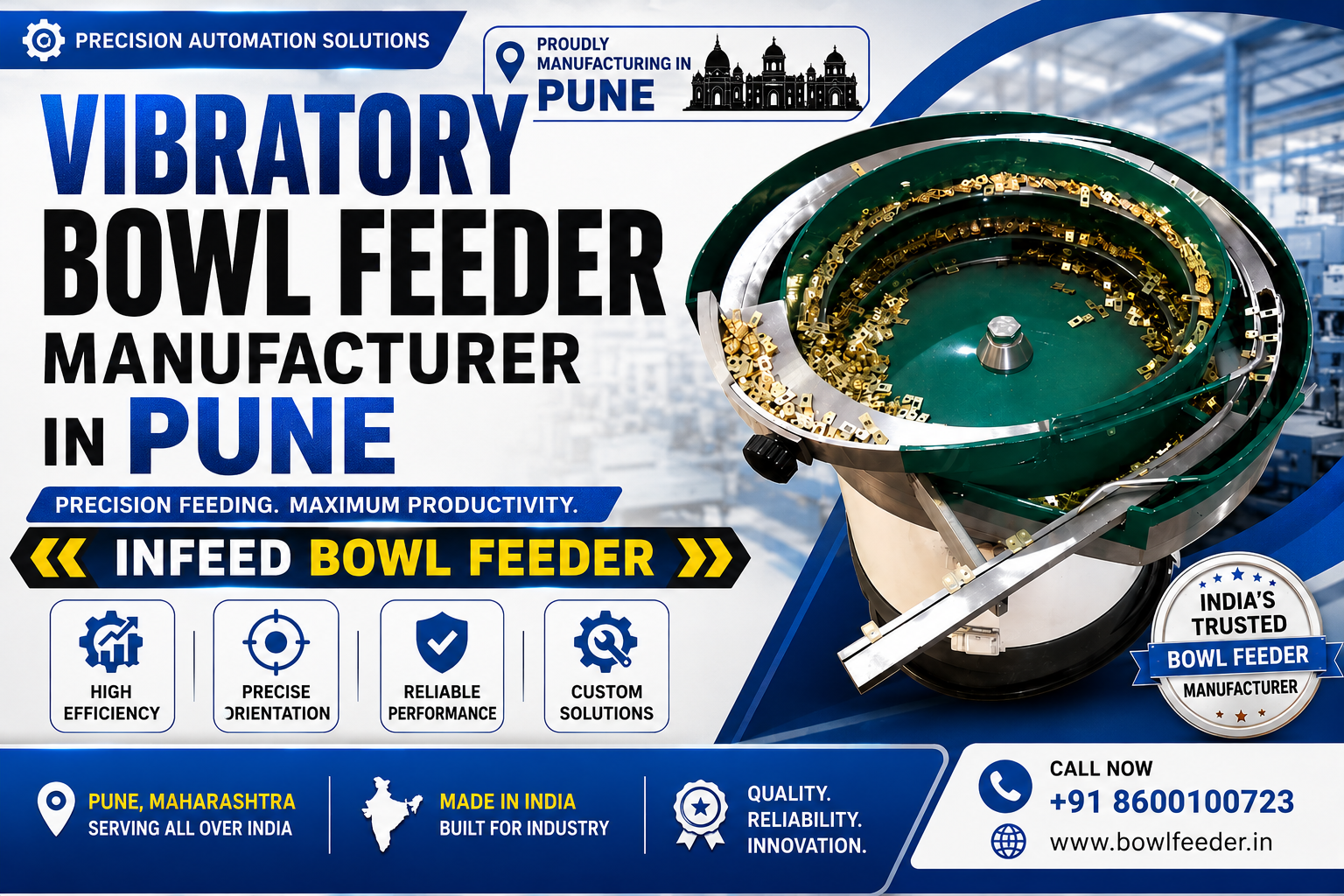
A spiral bowl feeder (also called a vibratory bowl feeder) is a mechanical device that automatically orients, sorts, and feeds small components in a specific, consistent orientation for downstream assembly, packaging, or inspection processes. It consists of a bowl-shaped track wound in a spiral, mounted on a vibrating base. As the bowl vibrates in a controlled, asymmetric pattern, parts climb the spiral track, get filtered through tooling features, and exit in a single, correctly oriented stream.
Instead of a person manually sorting and placing hundreds of small parts an hour, a bowl feeder does it continuously, consistently, and at a fraction of the labor cost.
How Spiral Bowl Feeders Work
The core principle behind a spiral bowl feeder is controlled vibration. Here’s the basic sequence:
- Bulk loading – Loose, randomly oriented parts are poured into the bowl in bulk.
- Electromagnetic or piezoelectric vibration – A drive unit beneath the bowl generates a high-frequency, low-amplitude vibration with a slight tilt or asymmetric motion.
- Climbing motion – This vibration causes parts to “hop” upward and forward along the spiral track, much like a controlled micro-throw motion repeated hundreds of times per minute.
- Orientation tooling – Along the track, custom-engineered features (wipers, cutouts, gates, drops, and rails) reject parts that are wrongly oriented, sending them back into the bowl to try again.
- Correct-orientation output – Only correctly oriented parts make it to the top of the spiral and exit through an outlet track, ready for the next automated process.
The real engineering challenge — and where experience matters most — lies in designing the tooling geometry for step 4. Every component shape (a screw, a cap, a spring, a connector pin) needs a unique tooling solution, which is why bowl feeder design is as much a craft as it is a science.
Key Design Elements of a Spiral Bowl Feeder
1. Bowl Geometry and Track Design
The diameter, spiral pitch, and track width are engineered around the part’s dimensions, center of gravity, and feed rate requirements. A poorly matched bowl geometry leads to jamming, part damage, or inconsistent output.
2. Drive Unit (Vibratory Base)
Electromagnetic drive units are the most common, offering adjustable amplitude and frequency through a controller. Piezoelectric drives are increasingly used for delicate or miniature components where gentler handling is required.
3. Tooling and Orientation Features
This is where custom engineering has the biggest impact on performance. Tooling elements include:
- Wipers – knock over incorrectly stacked parts
- Cutout tracks – allow wrongly oriented parts to fall back
- Air jets – blow off parts sitting in the wrong position
- Step and rail tooling – filter parts based on thickness or profile
4. Bowl Coating and Material
Bowls are typically made from stainless steel or aluminum, sometimes coated with polyurethane to reduce noise, protect delicate parts, and extend tooling life.
5. Controller and Frequency Tuning
Modern bowl feeders integrate with PLC-based controllers, allowing feed rate adjustment, stoppage detection, and integration with upstream/downstream machinery for full line synchronization.
6. Outlet and Escapement
The exit track often includes a gating or escapement mechanism to release parts one at a time, in sync with a pick-and-place robot, screw-driving station, or assembly fixture.
Benefits of Using Spiral Bowl Feeders
Consistent, High-Speed Part Orientation
Bowl feeders can process hundreds to thousands of small parts per minute with a level of consistency manual sorting simply cannot match.
Reduced Labor Dependency
Automating part feeding frees up operators for higher-value tasks and reduces reliance on repetitive manual sorting work — especially valuable amid rising labor costs and workforce shortages.
Improved Product Quality
Precise, repeatable orientation reduces assembly errors, misfeeds, and part damage — directly improving downstream product quality and reducing rework.
Lower Long-Term Operating Costs
While there’s an upfront investment, a well-designed bowl feeder typically pays for itself through labor savings, reduced downtime, and higher throughput within 12–24 months for most mid-to-high-volume applications.
Seamless Integration With Automation Lines
Bowl feeders are designed to interface directly with robotic arms, pick-and-place systems, screw feeders, and assembly machines — making them a natural fit for Industry 4.0-style automated lines.
Customizability for Unique Part Geometries
Unlike generic feeding solutions, a properly engineered spiral bowl feeder can be tuned to handle virtually any small part geometry — from asymmetric plastic clips to precision metal fasteners.
Space Efficiency
Their compact, vertical spiral design makes bowl feeders far more space-efficient than linear feeding or manual staging tables, which matters on crowded shop floors.
Manufacturing Applications of Spiral Bowl Feeders
Automotive Component Assembly
Feeding fasteners, clips, springs, seals, and small brackets into automated assembly lines for engine components, interior trims, and electrical connectors.
Electronics and Electrical Manufacturing
Orienting and feeding connector pins, terminals, small screws, switches, and PCB-mounted components at high speed for pick-and-place and screw-driving stations.
Pharmaceutical and Medical Device Manufacturing
Feeding caps, vial components, syringe parts, and small precision medical device components in cleanroom-compatible, hygienic bowl feeder configurations.
Packaging Industry
Orienting caps, closures, small packaging inserts, and dispensing components before capping or sealing machines.
Consumer Goods and Appliance Manufacturing
Feeding small hardware — clips, springs, knobs, and fasteners — into automated assembly cells for appliances, toys, and household products.
Fastener and Hardware Distribution
Sorting and counting screws, nuts, bolts, and washers for kitting, packaging, or direct feed into automated screwdriving machines.
Choosing the Right Spiral Bowl Feeder Manufacturer
Because tooling design is highly specific to each part’s shape and orientation requirements, the manufacturer’s engineering experience matters more than the feeder’s price tag. When evaluating a bowl feeder supplier, look for:
- Sample part testing before finalizing tooling design
- In-house tooling fabrication for faster iteration and lower long-term maintenance costs
- PLC/controller integration expertise for seamless line synchronization
- After-sales support and spare tooling availability
- Experience with your specific industry (automotive, pharma, electronics, etc.)
A feeder that looks similar on paper can behave very differently on the shop floor depending on how well the tooling was engineered for your exact component — which is why working with an experienced special purpose machine (SPM) manufacturer, rather than a generic supplier, often delivers better long-term reliability